Buying an Engagement Ring
Prices, styles, and how to walk in with confidence instead of confusion
Read guide 8 min
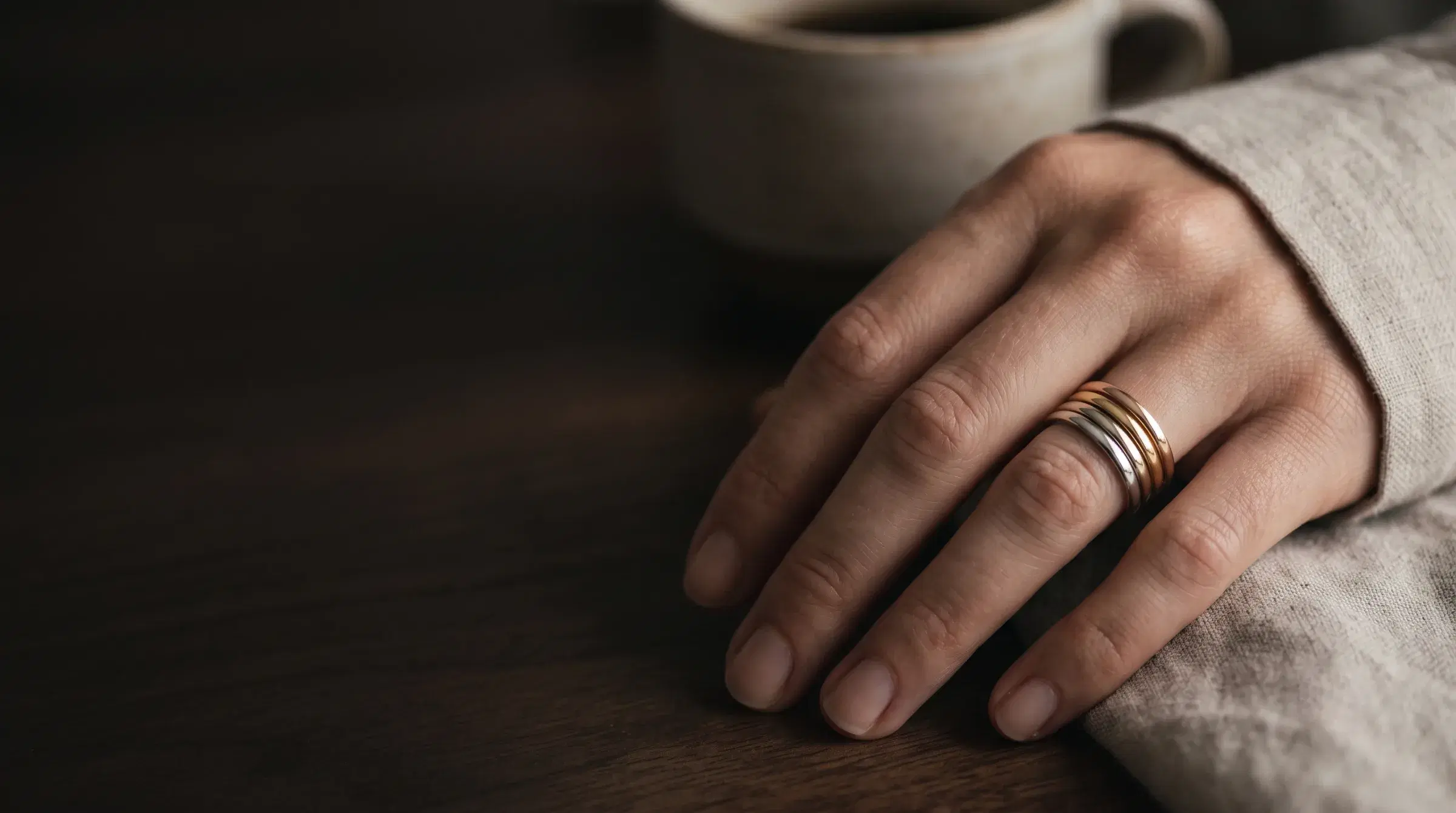
Metals guide
The metal you choose affects how your ring looks, feels, and ages over years of daily wear. Here's what the jeweller won't always tell you.
Why it matters
People spend weeks choosing the right diamond, then pick the metal in thirty seconds. That's backwards. The diamond sits on top — the metal is what wraps around your finger every day. It's what you feel, what touches your skin, and what changes (or doesn't) over the years.
Each metal has trade-offs. None of them are objectively "best" — but one of them is probably best for you. Let's go through them honestly.
The four metals
Side-by-side
Everything you need in one view. This is how we'd explain it to a friend.
| Platinum | 18K White Gold | 18K Rose Gold | 18K Yellow Gold | |
|---|---|---|---|---|
| Colour | Cool silver-white | Silver-white (plated) | Warm pink | Classic gold |
| Durability | Excellent — metal displaces, doesn't wear away | Good — harder than platinum but loses material when scratched | Very good — copper adds hardness | Good — softer than rose gold, similar to white gold |
| Maintenance | None — develops a natural patina. Polish if preferred | Replating every 12-18 months (£30-£50) | None — colour is permanent | None — colour is permanent |
| After 1 year | Develops a soft satin finish — many people love this | Plating begins to show warm tone underneath | Looks the same — may deepen very slightly | Looks the same — minor surface scratches |
| Weight | Heaviest — noticeable presence on the hand | Medium | Medium | Medium |
| Hypoallergenic | Yes — completely | Check the alloy — some contain nickel | No — contains copper | Yes — traditional alloy is very safe |
| Setting price | £600-£900 | £400-£600 | £400-£600 | £350-£550 |
Price note: These are setting prices only — the metal band and prong work, not including the diamond. Total ring prices depend on your stone. See our Hatton Garden price guide for full ring costs.
The long view
This is the part most jewellers skip. Every metal changes with wear. Some changes are beautiful. Some require upkeep. Know which is which before you choose.
After a year of daily wear, platinum develops a soft, satin-like finish that jewellers call a patina. It's not damage — it's the metal redistributing on the surface. Many people prefer how platinum looks after a year to how it looks brand new. If you want the mirror finish back, any jeweller can polish it for you in ten minutes. But most platinum owners leave it.
After 12-18 months, the rhodium plating on white gold starts to thin. You'll notice a slightly warmer, champagne-toned colour appearing — especially on the underside of the band where it contacts skin and moisture most. This is completely normal. A quick replating at any Hatton Garden jeweller restores it to bright white. Think of it like servicing a car — not a flaw, just maintenance.
Both rose gold and yellow gold look essentially the same after a year as they did on day one. The colour is the alloy itself, not a surface treatment, so there's nothing to wear off. You'll pick up surface scratches — every metal does — but the overall tone and character remain unchanged. A quick polish once a year brings back the shine if you want it.
Trend worth noting
For twenty years, white metals dominated engagement rings. Platinum and white gold were the default — anything yellow felt like your grandmother's ring. That's changing.
Yellow gold is the fastest-growing metal choice in Hatton Garden right now. It's driven partly by the vintage revival — oval and cushion-cut diamonds in yellow gold solitaires look intentionally classic, not dated. And partly by practicality: yellow gold needs no replating, pairs naturally with warmer diamond colours, and costs less than platinum.
We think it's a smart choice — especially if you're drawn to it aesthetically. Don't let the white metal default steer you away from what you actually prefer. The ring is going to be on her hand for decades. Choose the metal she'll love looking at, not the one that's currently most common.
Our take
Here's what we tell people who ask:
Whichever metal you choose, check what you're actually getting: the hallmark inside the band should say 750 for 18ct gold or 950 for platinum. Learn to read a hallmark.
Next steps
Keep building your knowledge before you visit a jeweller.
Prices, styles, and how to walk in with confidence instead of confusion
Know what you're looking at before a jeweller explains it to you on their terms
Real price ranges so you know whether a quote is fair before you hear it
Yes. White gold is naturally a warm champagne colour — the bright silver-white you see in shops is a rhodium plating applied on top. That plating wears off over 12-18 months of daily wear, revealing the warmer tone underneath. Replating costs around £30-£50 and takes about an hour at most Hatton Garden jewellers. It's routine maintenance, not a defect.
It depends on what matters to you. Platinum is denser, more durable, hypoallergenic, and never needs replating. But it's typically £200-£300 more than 18K white gold for the same setting. If you want a ring that stays silver-white forever without maintenance, platinum is worth it. If you don't mind replating every year or two, white gold gives you the same look for less.
Yes — and it's increasingly popular. A rose gold engagement ring with a white gold or platinum wedding band creates a beautiful contrast. Just make sure the metals are similar in hardness if they sit together daily. Platinum against 9K gold, for instance, will cause the softer gold to wear faster. Stick to 18K gold alongside platinum and you'll be fine.
9K gold is 37.5% pure gold and 62.5% alloy metals, while 18K gold is 75% pure gold and 25% alloy. 18K has a richer colour, is more hypoallergenic (less nickel), and is the standard for engagement rings. 9K is harder and more scratch-resistant, but it's less prestigious and the colour is noticeably paler. For engagement rings, 18K is the standard in Hatton Garden — most jewellers won't even offer 9K for engagement pieces.
Rose gold is genuinely flattering across a wide range of skin tones — its warm pink hue complements both cool and warm complexions. If you're unsure, visit a jeweller and try on a rose gold band alongside white gold and yellow gold. You'll see immediately which one looks most natural against the skin. There's no wrong answer — it's a personal preference.