Buying an Engagement Ring
The complete walkthrough — what to decide first, what can wait, and what doesn't matter as much as you think
Read guide 8 min
Hatton Garden price guide
No vague "prices vary" disclaimers. Real figures for real ring specs, based on what Hatton Garden jewellers are actually charging in 2026.
New: what UK retailers are charging this quarter, natural vs lab-grown, in our Hatton Garden Price Index.
How ring pricing works
Every engagement ring is two things: a setting (the metal band and prongs) and a centre stone. The setting typically costs £300-£800 depending on metal and complexity. The diamond is where the real cost sits — and where specifications make the biggest difference to price.
The metal band, prongs, and any accent stones. This is the smaller part of the cost.
This is where 80-90% of the total cost comes from. The same carat weight can vary enormously based on cut, colour, and clarity grades. A well-cut G-colour VS2 diamond looks identical to a D-colour VVS1 to the naked eye — but costs 40-60% less.
Every price in this guide assumes a good balance of specs: Excellent or Very Good cut, G-H colour, VS1-VS2 clarity. These are the grades we recommend for most buyers — eye-clean, well-cut, and representing the best value-to-beauty ratio. Read our diamond buying guide for a full breakdown of how grades affect price.
Solitaire engagement rings
The solitaire is the most popular engagement ring style — a single centre diamond on a plain band. These prices include the setting and a GIA or IGI certified diamond (Excellent/Very Good cut, G-H colour, VS1-VS2 clarity).
| Carat | 18ct White Gold (Natural) | Platinum (Natural) | 18ct White Gold (Lab-Grown) | Platinum (Lab-Grown) |
|---|---|---|---|---|
| 0.50ct | £1,500-£2,200 | £1,700-£2,500 | £700-£1,100 | £900-£1,300 |
| 0.70ct | £2,500-£3,800 | £2,800-£4,100 | £1,000-£1,600 | £1,200-£1,800 |
| 1.00ct | £4,500-£7,500 | £4,800-£8,000 | £1,800-£3,000 | £2,000-£3,500 |
| 1.50ct | £8,000-£14,000 | £8,500-£14,500 | £2,800-£4,500 | £3,000-£5,000 |
| 2.00ct | £15,000-£28,000 | £15,500-£28,500 | £4,500-£7,000 | £4,800-£7,500 |
Notice how the price jumps sharply at each "magic number" carat weight — 1.00ct, 1.50ct, 2.00ct. A 0.95ct diamond can cost 15-20% less than a 1.00ct with identical grades, and you genuinely cannot tell the difference on the finger. This is one of the most practical things to know when buying.
Other ring styles
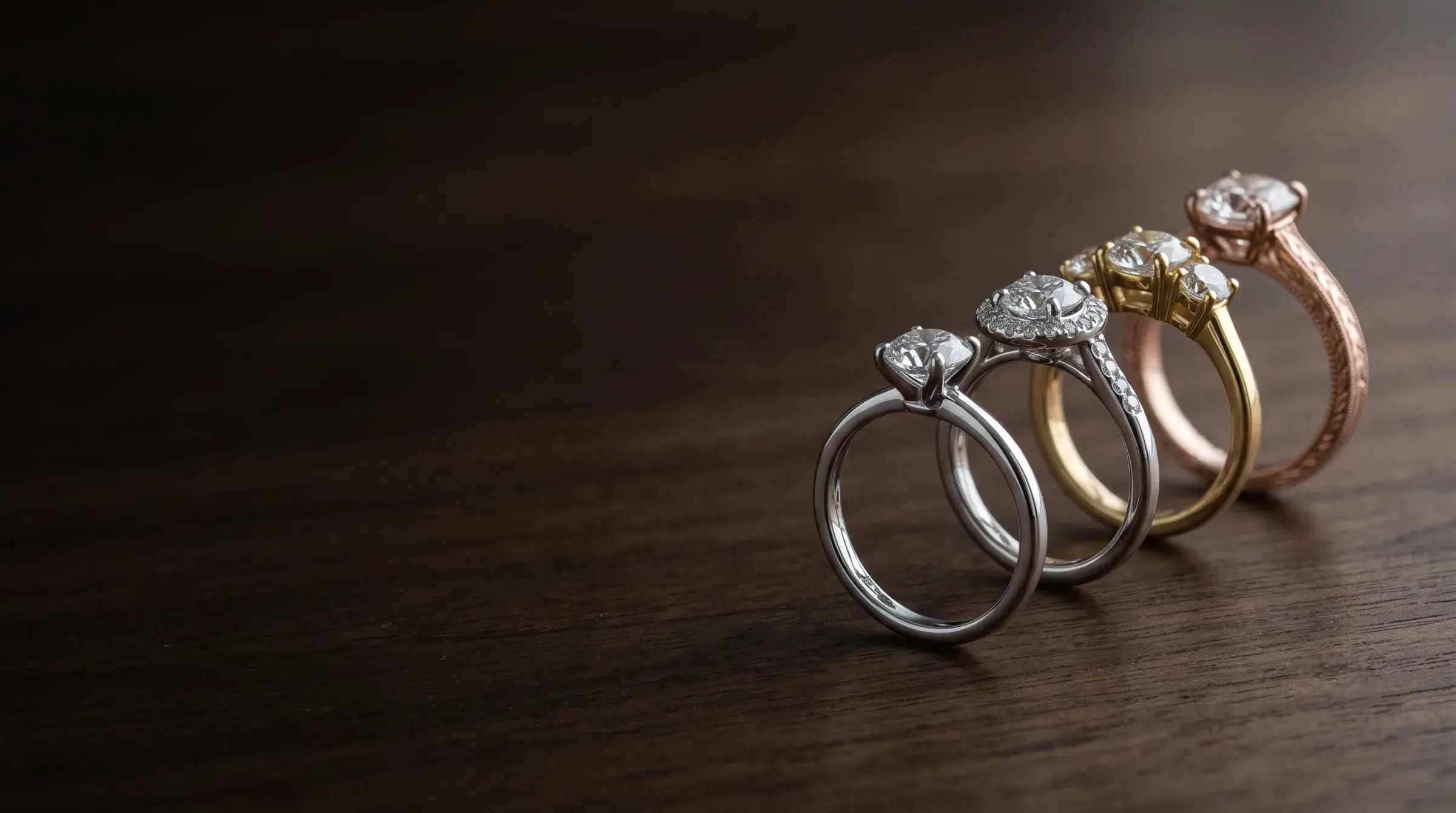
Different settings change the total cost. Halo and trilogy settings use additional diamonds, which adds to the price. Vintage styles often involve more metalwork. All prices below assume a 1ct centre stone (natural, G-H, VS1-VS2) in 18ct white gold or platinum.
| Style | 18ct White Gold | Platinum | What makes it different |
|---|---|---|---|
| Solitaire | £4,500-£7,500 | £4,800-£8,000 | Single centre stone, plain band |
| Halo | £5,200-£8,500 | £5,500-£9,000 | Small diamonds surround the centre stone — makes it appear larger |
| Trilogy | £6,500-£11,000 | £7,000-£11,500 | Three stones — centre plus two smaller side stones |
| Vintage / Art Deco | £5,500-£9,500 | £6,000-£10,000 | Intricate metalwork, milgrain edges, accent stones |
| Pavé band | £5,000-£8,200 | £5,300-£8,700 | Tiny diamonds set into the band itself |
What your money gets you
Instead of guessing, here is exactly what you can expect at each price point. These are realistic specs from Hatton Garden jewellers — not best-case or worst-case, but what most buyers actually walk away with. Still deciding on a figure? Read how much you should spend on an engagement ring.
Total ring prices for round diamonds, setting included. Fancy shapes like oval and cushion typically cost 15–25% less per carat.
Want to see exactly what your figure gets you? Try the Budget Calculator — enter your number and we'll show you what's realistic at that level.
Online-first jewellers
Online-first Hatton Garden jewellers invest in technology — ring builders, 360-degree diamond viewers, certified stone databases — instead of expensive showroom displays. This is not about cost-cutting. It is about giving you better tools and more transparency.
| Traditional showroom | Online-first jeweller | |
|---|---|---|
| Price visibility | Discussed in person — you find out when you visit | Shown on the website before you make contact |
| Diamond selection | Limited to what's in the cabinet — typically 20-50 stones | 1,000,000+ certified diamonds searchable by spec |
| Comparison tools | Side-by-side in the shop — depends on stock | Filter, compare, and configure online at your pace |
| The experience | Walk-in browsing, in-person guidance | Research online, then confirm by appointment — your visit is focused |
| Pricing model | Higher overheads built into the price | Lower overheads — investment goes into technology and sourcing |
The argument isn't about who charges less. It's about what you get for the price: more choice, more transparency, and the ability to do your research before you speak to anyone. We recommend comparing quotes from both types — see our guide to the best Hatton Garden jewellers for who we recommend.
How to use this guide
These prices are a reference point, not a ceiling or floor. Here is how to use them when you start shopping.
Ask each jeweller for a written quote specifying: carat weight, cut grade, colour grade, clarity grade, certification body, metal type, and setting style. Without these details, you cannot compare prices meaningfully. A "1 carat ring" can vary by thousands depending on those specs.
Every quote should include a GIA or IGI report number. You can verify the diamond's specs directly on the GIA or IGI website. If a jeweller won't give you the certificate number, that is a red flag. Read our certification guide for how to check.
Got a quote and want to check if it is fair? Use the Price Checker. Enter the specs and we will show you what that typically costs across Hatton Garden. No signup required.
The ring itself is just part of it. Factor in insurance (1-2% of ring value per year), a wedding band later, and any resizing. These are small costs relative to the ring, but plan for them.
Now you know what things cost. Here is where to go from here.
The complete walkthrough — what to decide first, what can wait, and what doesn't matter as much as you think
Same stone, different origin. What that means for you in terms of specs, certification, and long-term value
Who we recommend, what each one is best for, and the experience you can expect
A 1 carat natural diamond solitaire in Hatton Garden typically costs between £4,500 and £8,000 depending on the diamond's cut, colour, and clarity grades, and whether you choose platinum or 18ct gold. A lab-grown equivalent with the same specifications runs between £1,800 and £3,500. The setting itself accounts for roughly 10-20% of the total — the diamond is where most of the cost sits.
Hatton Garden jewellers — particularly online-first ones — operate with different cost structures. They invest in technology and sourcing rather than expensive retail showrooms. You get access to a wider selection of certified diamonds and transparent pricing. It's not about being cheaper — it's about paying for the product rather than the premises.
Physically and chemically, yes. Lab-grown diamonds have the same crystal structure, hardness, and optical properties. They receive the same GIA or IGI certification. The difference is origin and resale: lab-grown diamonds are created in a controlled environment and their resale value is currently lower than natural diamonds. The trade-off is clear — same stone on your finger, different long-term value proposition.
A simple solitaire with a 0.5ct lab-grown diamond in 9ct white gold starts from around £600-£800. At this level, you're getting a genuine diamond ring with proper certification. If you want a natural diamond, the same spec starts around £1,200-£1,600. There's no shame in any price point — what matters is that you understand exactly what you're getting for your money.
At traditional showroom jewellers, there's sometimes room for negotiation — especially if you're comparing quotes. Online-first jewellers typically display transparent pricing that already reflects their lower operating costs, so there's less flexibility. The most effective strategy isn't haggling — it's getting written quotes from 3-4 jewellers for the exact same spec (same carat, cut, colour, clarity, metal, setting) and comparing them directly.