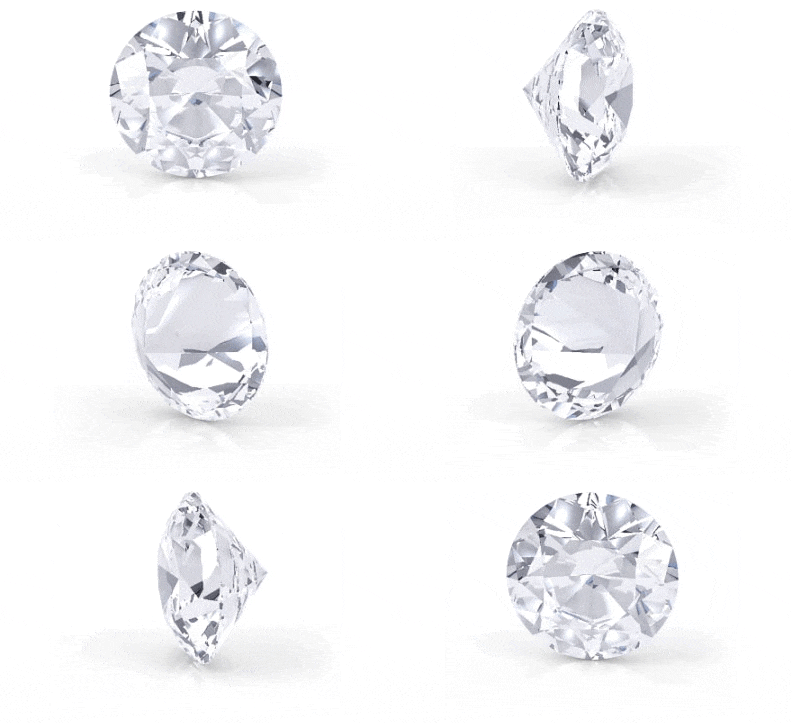
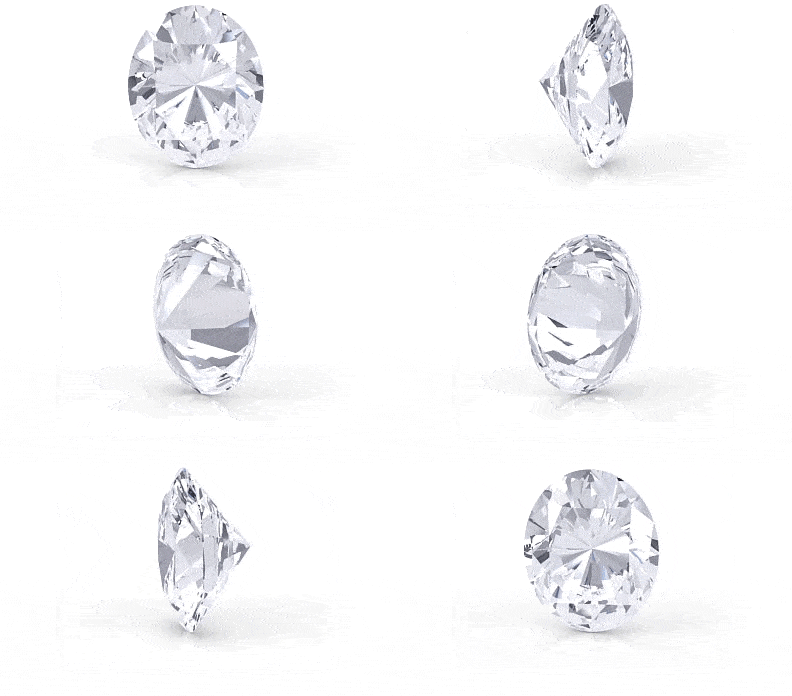
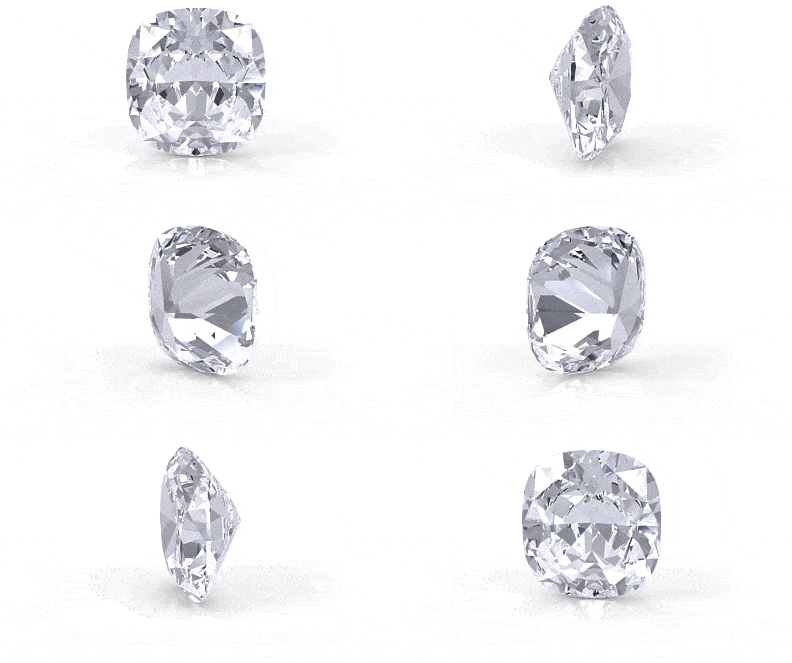
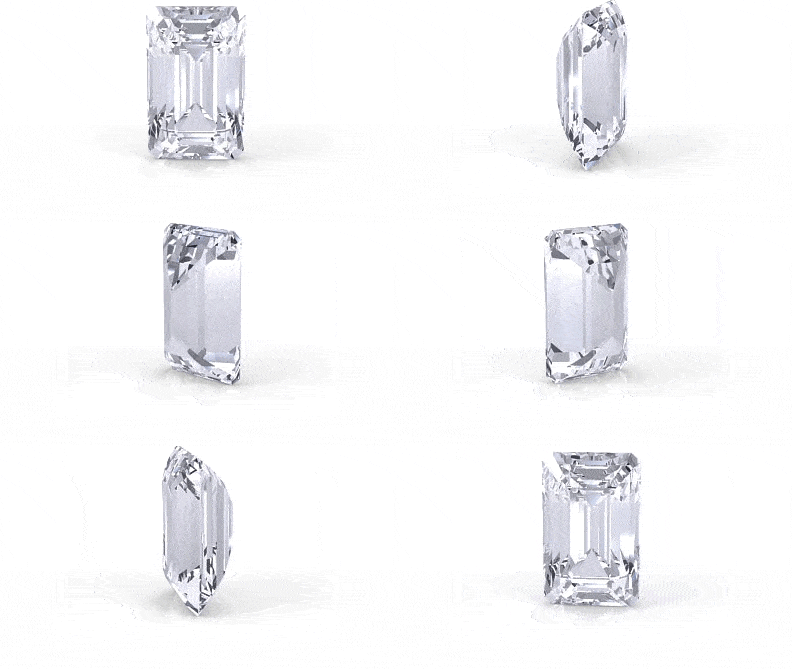
The 4Cs — The Full Breakdown
Everything we covered above, in complete detail. Visual comparisons, grade-by-grade analysis, and what to prioritise at every price point
Read guide 6 min read
Diamond buying guide
The non-textbook version. What actually affects how a diamond looks, why certificates matter more than sales patter, and what to ask before you hand over money.
The 4Cs in 30 seconds
Every diamond guide starts with the 4Cs. Most of them read like a gemology lecture. Here's what you actually need to know — what affects how it looks on her hand versus what's just a number on a certificate.
Cut determines how a diamond handles light. A well-cut diamond sparkles. A poorly-cut one looks dull and lifeless — even if it's a high colour and clarity grade. Always go Excellent or Ideal cut. This is the one place you should never compromise. Two diamonds with identical carat, colour, and clarity will look completely different if one has a better cut.
The colour scale runs from D (colourless) to Z (visible yellow). Here's the truth: D, E, F, G, and H all look white to the naked eye once set in a ring. The difference between a D and a G is invisible without lab equipment and side-by-side comparison on a white background. We recommend G or H — you'll get a white-looking diamond and redirect the savings into a better cut.
Clarity measures tiny internal marks called inclusions. The scale goes from FL (flawless) down to I3 (visible inclusions). The sweet spot is VS2 or VS1 — both are "eye-clean," meaning no one will see inclusions without a 10x magnifying loupe. Paying for VVS1 or IF gives you bragging rights on the certificate. It won't change how the diamond looks on her finger.
Carat is weight, not visual size. A well-cut 0.9ct diamond can look larger than a poorly-cut 1.0ct because the light return makes it appear brighter and bigger. Prices jump at round numbers — a 0.90ct costs noticeably less than a 1.00ct with no visible size difference. Consider going just under the round number and spending the difference on a better cut grade.
Want the full breakdown? Read our complete 4Cs guide
Non-negotiable
If a jeweller won't show you a certificate, you don't know what you're buying. Full stop. A certificate is the only independent proof of what that diamond actually is.
Our recommendation: only buy a GIA or IGI certified diamond. No exceptions. If you want to understand how to read a certificate in 30 seconds, read our certification guide. For online diamond search tools that show full certificates upfront, see our certification guide.
The hierarchy
Not all 4Cs are created equal. Here's the honest priority order — what someone will actually notice when they look at the ring on her hand, ranked from most visible to least.
A well-cut diamond returns light to your eye. It sparkles from across the room. A poorly-cut stone — even a D colour, IF clarity — looks flat and glassy. Cut is the single biggest factor in how a diamond performs visually. Always choose Excellent or Ideal cut grade. This is the hill we will die on.
Size is the next most obvious characteristic. People will notice how big the diamond is. They won't notice whether it's 0.90ct or 1.00ct — that difference is invisible — but they'll notice 0.50ct versus 1.00ct. Choose the carat that fits your ring design and her preference. Just don't sacrifice cut to get a bigger stone.
Below I colour, you may start to notice a yellow tint in certain lighting. Above G colour, the differences are laboratory-grade. G or H colour is the smart range for most people — visually white, significantly less expensive than D-F. In a white gold or platinum setting, a G diamond looks colourless. In a yellow or rose gold setting, you can go down to I or J and the metal tone masks it completely.
Nobody has ever looked at an engagement ring and said, "Wow, that's a VS1." Once a diamond is eye-clean (VS2 and above), clarity differences are invisible in daily wear. You are paying for what shows up under 10x magnification. We recommend VS2 as the baseline — clean to the naked eye at a fair price. SI1 can also work if you check that inclusions are not directly under the table facet.
At a glance
The practical impact of each grade — what you see, what you pay, and where the sweet spot sits.
| Factor | Premium grade | Sweet spot | Visible difference? | Price impact |
|---|---|---|---|---|
| Cut | Excellent / Ideal | Excellent / Ideal | Yes — dramatic difference in sparkle | 10-15% more than Very Good |
| Colour | D (colourless) | G or H | No — D vs G invisible once set | 30-40% more for D vs G |
| Clarity | IF (internally flawless) | VS2 | No — both eye-clean | 40-60% more for IF vs VS2 |
| Carat | Larger is bigger | Just under round numbers | 0.90 vs 1.00 — no visible difference | 15-20% jump at 0.50, 1.00, 1.50, 2.00 |
Got a quote and want to check it? Use our "Is This a Fair Price?" tool
Think you can see the difference between grades? Take the diamond test
The transparency advantage
The traditional model: walk into a shop, look at 20 diamonds in a glass case, hope the sales person is being straight with you. The online-first model flips that entirely.
Online-first Hatton Garden jewellers list only GIA or IGI certified stones. Each one comes with full specs, high-resolution imagery, and a certificate you can verify independently. No guesswork. No "trust me, it's an F colour." You can check it yourself on the GIA website in 10 seconds.
Instead of choosing from whatever is in the display case, online-first jewellers give you access to global certified diamond databases. Filter by shape, carat, colour, clarity, cut — see the price for each one instantly. You can compare Hatton Garden jewellers to find the right diamond search tool, compare stones side-by-side, and have your shortlist ready before you speak to anyone.
You see the full price upfront — diamond cost, setting cost, total. No "let me check in the back" or "I can do you a deal." The price is the price. This means you can compare across multiple jewellers on the same diamond specs without spending entire weekends walking between shops.
We recommend doing your research online first, then booking a consultation to see your shortlisted stones in person. The visit becomes confirmation, not exploration.
Real numbers
GIA-certified round brilliant diamonds, Excellent cut. These are real price ranges for natural stones in Hatton Garden as of late 2026. Lab-grown diamonds are significantly lower — see our lab-grown guide.
| Carat | G / VS2 | G / SI1 | D / VVS2 | Lab-grown (G / VS2) |
|---|---|---|---|---|
| 0.50ct | £1,200 – £1,800 | £900 – £1,400 | £2,000 – £3,200 | £300 – £600 |
| 0.70ct | £2,200 – £3,200 | £1,700 – £2,600 | £3,500 – £5,500 | £500 – £900 |
| 1.00ct | £5,000 – £7,000 | £3,800 – £5,500 | £8,000 – £12,000 | £1,000 – £2,000 |
| 1.50ct | £9,000 – £13,000 | £7,000 – £10,000 | £15,000 – £22,000 | £1,500 – £3,000 |
| 2.00ct | £16,000 – £24,000 | £12,000 – £18,000 | £28,000 – £42,000 | £2,500 – £5,000 |
Prices are for loose GIA-certified diamonds only (setting not included). Ranges reflect multiple Hatton Garden jewellers surveyed in 2026. Fancy shapes (oval, pear, cushion) are typically 10-25% less than round brilliant at the same specs.
GIA (Gemological Institute of America) or IGI (International Gemological Institute). Both are independent labs that grade diamonds consistently. GIA is the gold standard for natural diamonds. IGI is widely used for lab-grown stones. If a jeweller offers an in-house certificate or no certificate at all, you have no independent verification of what you're buying. Walk away.
A GIA-certified 1ct round brilliant ranges from roughly £3,500 to £12,000 depending on cut, colour, and clarity grades. A well-cut G colour, VS2 clarity stone — which looks white and clean to the naked eye — typically falls between £5,000 and £7,000. Lab-grown equivalents run £1,000 to £2,500 for the same specs. Always compare like-for-like certificates, not just carat weight.
In most settings, no. D, E, F (colourless) and G, H (near-colourless) look identical to the naked eye once the diamond is set in a ring. The price difference between a D and a G at the same carat, cut, and clarity can be 30-40%. We recommend putting that difference into a better cut grade instead — cut is what actually makes a diamond look alive.
A diamond is eye-clean when you cannot see any inclusions (internal marks) without magnification. VS2 and VS1 are virtually always eye-clean. SI1 is usually eye-clean depending on where the inclusions sit. SI2 and below often have visible marks. Most people looking at your ring will never use a 10x loupe — they'll see sparkle and size, not microscopic inclusions.
Both work, but online-first jewellers based in Hatton Garden give you one significant advantage: you can search and compare thousands of certified diamonds with full specs, images, and pricing before you talk to anyone. Traditional shops show you what's in their display case — typically 20-50 stones. We recommend doing your research online first, then booking a consultation to see your shortlisted stones in person.
Now you understand diamonds, here's what to look at next.
Everything we covered above, in complete detail. Visual comparisons, grade-by-grade analysis, and what to prioritise at every price point
Same crystal structure, same sparkle, fully certified. Here's the full picture — including the resale trade-off
The complete comparison: science, price, resale, ethics, and what actually matters for your decision
You know diamonds now. Here's how to choose the ring — settings, metals, styles, and what to decide first
A GIA certificate in 30 seconds — what each section means and the three numbers that actually matter
Enter two diamond specs and see them side-by-side. Which one is actually worth it?