The story of a street

How a medieval garden became London's diamond quarter

Eight hundred years of history. From bishops and courtiers to Italian gem cutters, wartime survival, a heist that made the front pages, and a new generation of jewellers rewriting the rules.

The short version

800 years in two minutes

If you're short on time, here's the arc: a bishop's garden becomes a courtier's estate, then a street, then the centre of the British diamond trade. The rest is detail — and the detail is worth reading.

1200s

The Bishop's Garden

The land belongs to the Bishops of Ely — a walled garden with orchards and vineyards in what was then the outskirts of London.

1659

The Garden Goes Public

After the English Civil War, the Ely estate is broken up and the land is developed into streets. Hatton Garden gets its name from Sir Christopher Hatton, who acquired the property from the bishops.

1830s–1860s

The Italian Arrival

Italian craftsmen — many from the Lombardy region — settle in nearby Clerkenwell and begin working in metalwork, clockmaking, and gem cutting. The skills transfer into jewellery.

1879

The Diamond Connection

The De Beers company is founded in South Africa, and London becomes the gateway for rough diamonds entering Europe. Hatton Garden's cutters and dealers position themselves as the link between raw stones and finished jewellery.

1940s

Wartime and Recovery

The Blitz damages parts of the area, but the trade survives. Post-war Hatton Garden rebuilds and consolidates its position as the UK's centre for diamonds and precious stones.

2000s

The Engagement Ring Boom

Hatton Garden becomes synonymous with engagement rings for a new generation of buyers. Walk-in shops and bespoke jewellers line the street.

2015

The Heist

The Hatton Garden Safe Deposit burglary becomes the largest in English history. It puts the street on the front page of every newspaper in the country.

2020s

The Online-First Era

A new wave of technology-driven jewellers arrives. Ring builders, certified diamond databases, and transparent pricing change how people buy on Hatton Garden.

Stories of the street

Seven doors most visitors walk straight past

Swipe through them in order and you've walked the street from the bishops' chapel at the south end to the charity school near the top.

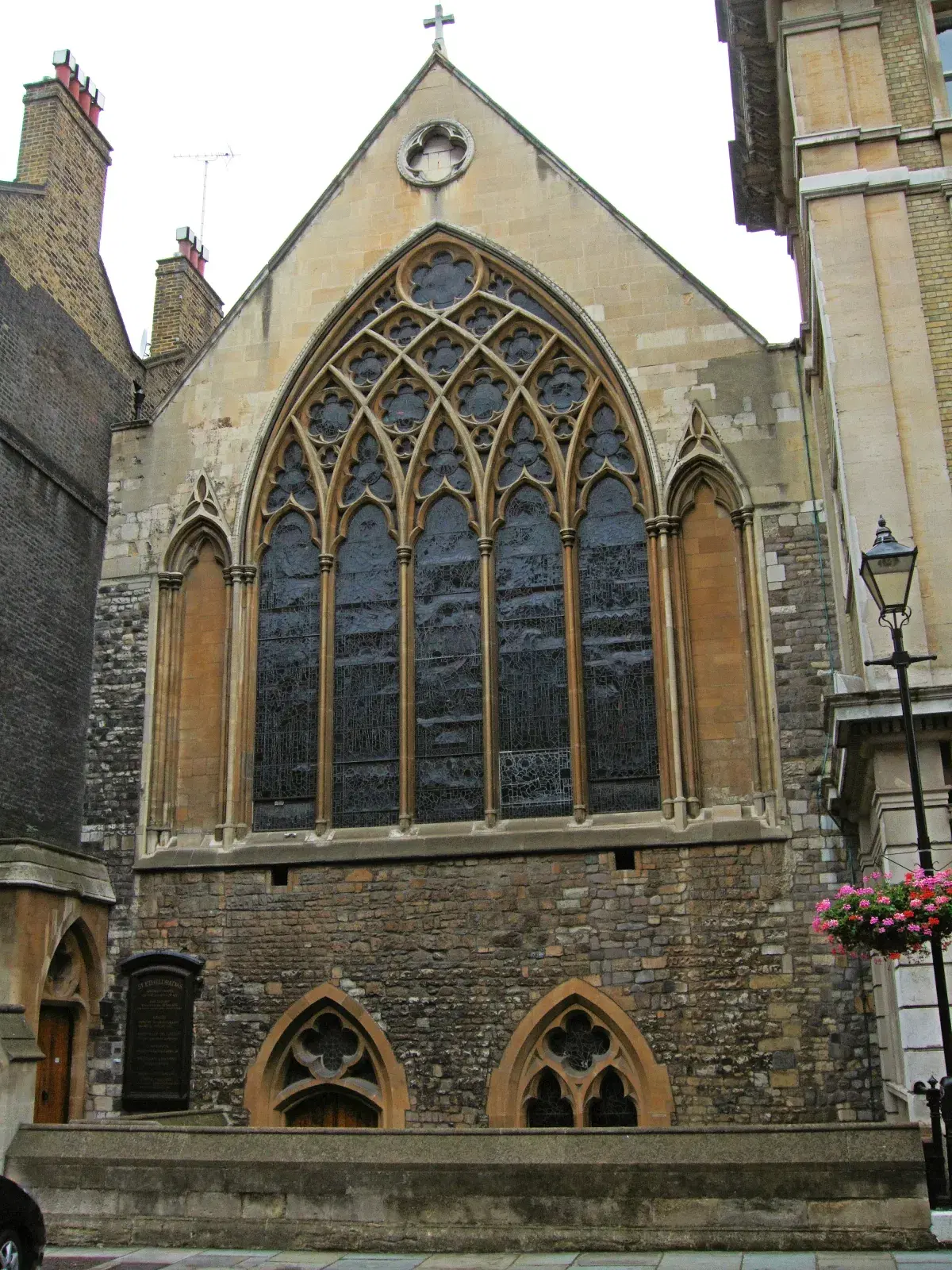
The stone Gothic front of St Etheldreda’s Church with its large tracery windowEly Place

The bishops’ chapel

Built in the 1250s as the private chapel of the Bishops of Ely, St Etheldreda’s is one of the oldest Catholic churches in England. The bishops’ palace and gardens once covered this whole area — Hatton Garden grew out of their land. Shakespeare even mentions the strawberries grown here, in Richard III.

Photo: “St Etheldreda's Church, Ely Place, London” by Jim Linwood, CC BY 2.0

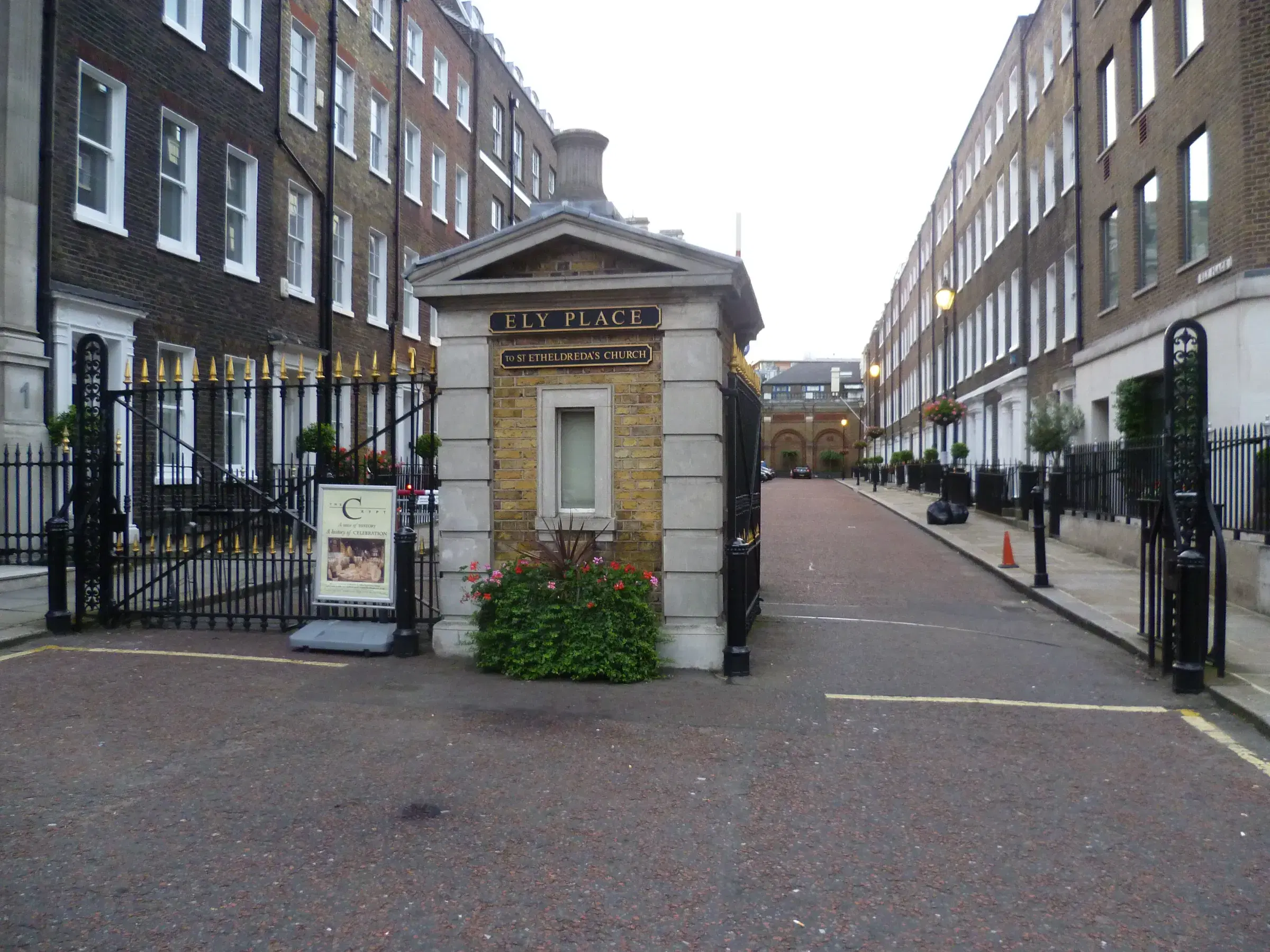
The small stone gatehouse and iron gates at the entrance to Ely PlaceOff Charterhouse Street

The road with its own gates

Step through the gatehouse and you’re on a private road built over the bishops’ old palace grounds. Local legend says it stayed technically part of Cambridgeshire for centuries, and that the police needed an invitation to come in. Whatever the truth, the gates and lodge are still there.

Photo: “The entrance to Ely Place, Holborn” by Marathon / Geograph, CC BY-SA 2.0

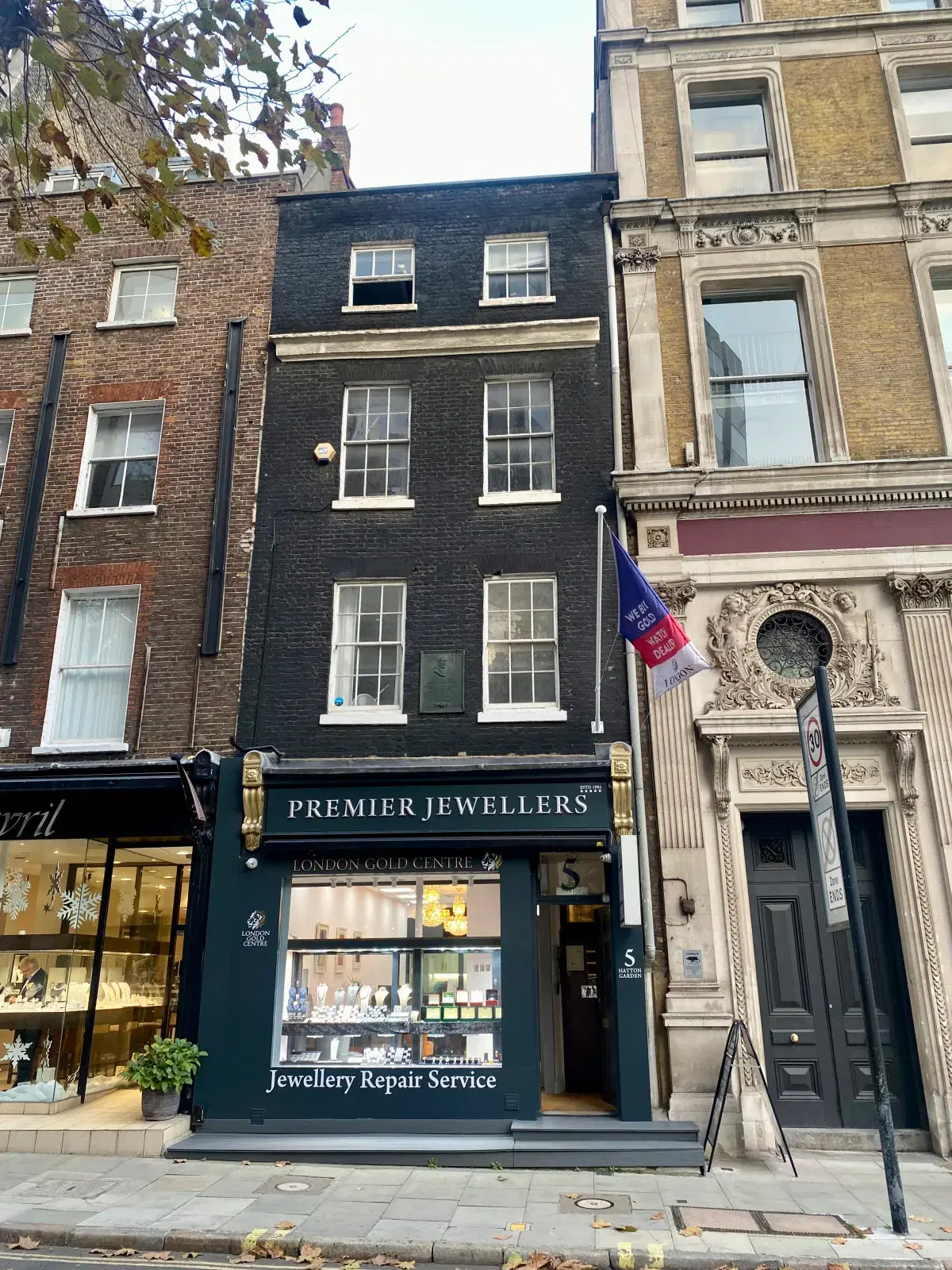
The narrow black-brick front of 5 Hatton Garden with a bronze plaque above the shop5 Hatton Garden

The revolutionary upstairs

A bronze plaque on the first floor marks where Giuseppe Mazzini, the exiled champion of a united Italy, lived and worked. He wasn’t the only Italian here: these streets were filling with Italian craftsmen — the community whose metalwork and gem-cutting skills turned Hatton Garden into London’s jewellery quarter.

Photo: “5 Hatton Garden, London, December 2022” by No Swan So Fine, CC BY-SA 4.0

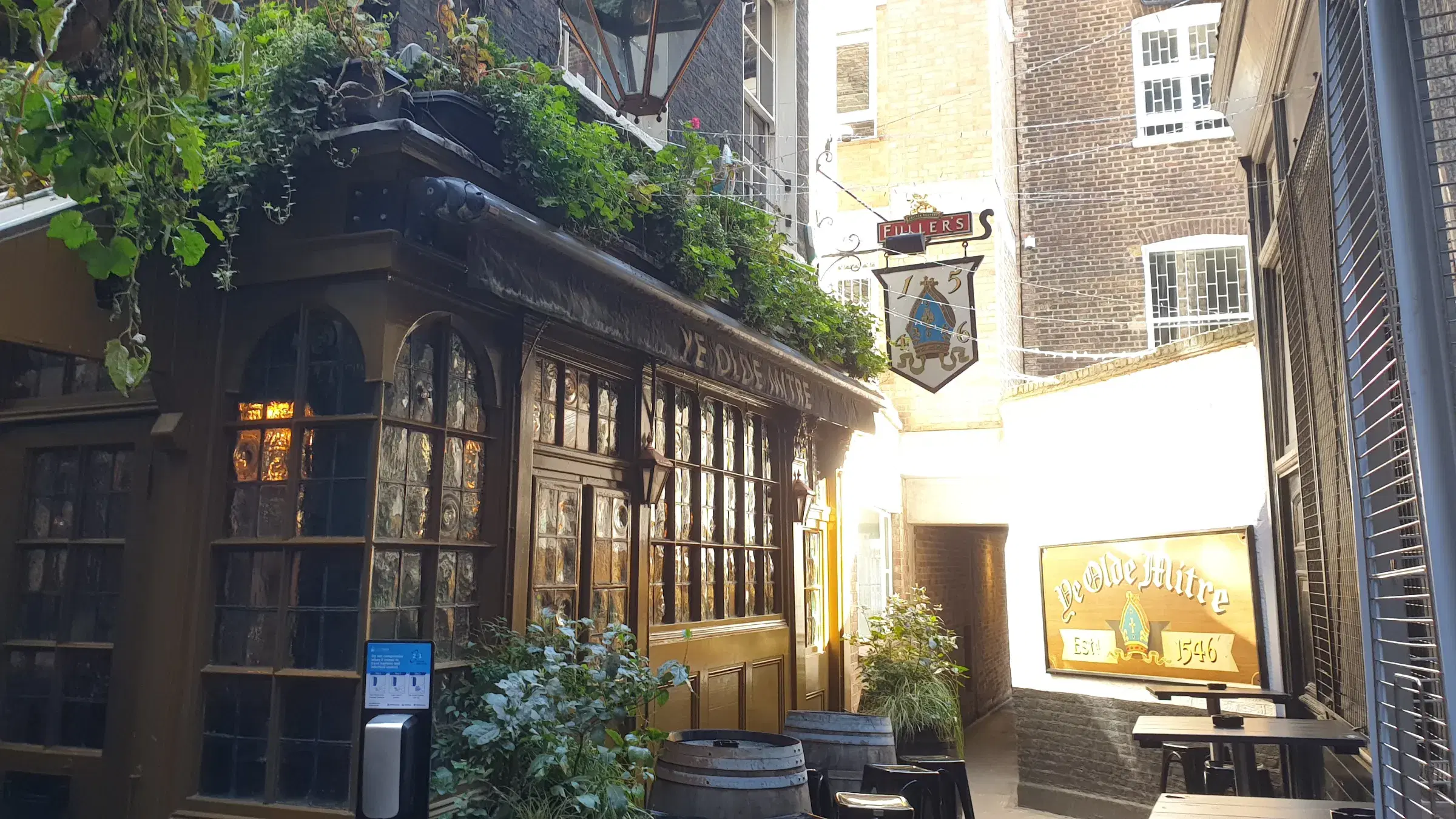
The dark timber front of Ye Olde Mitre pub in its narrow alleyBetween 8 and 9 Hatton Garden

The pub that hides

Down a passage most people walk straight past, Ye Olde Mitre has been serving since 1546 — first for the servants of the bishops’ palace. Inside is what’s said to be the trunk of an old cherry tree. Legend has it Elizabeth I danced around it, and that it marked the edge of Christopher Hatton’s garden.

Photo: “Ye Olde Mitre” by JRennocks, CC BY-SA 4.0

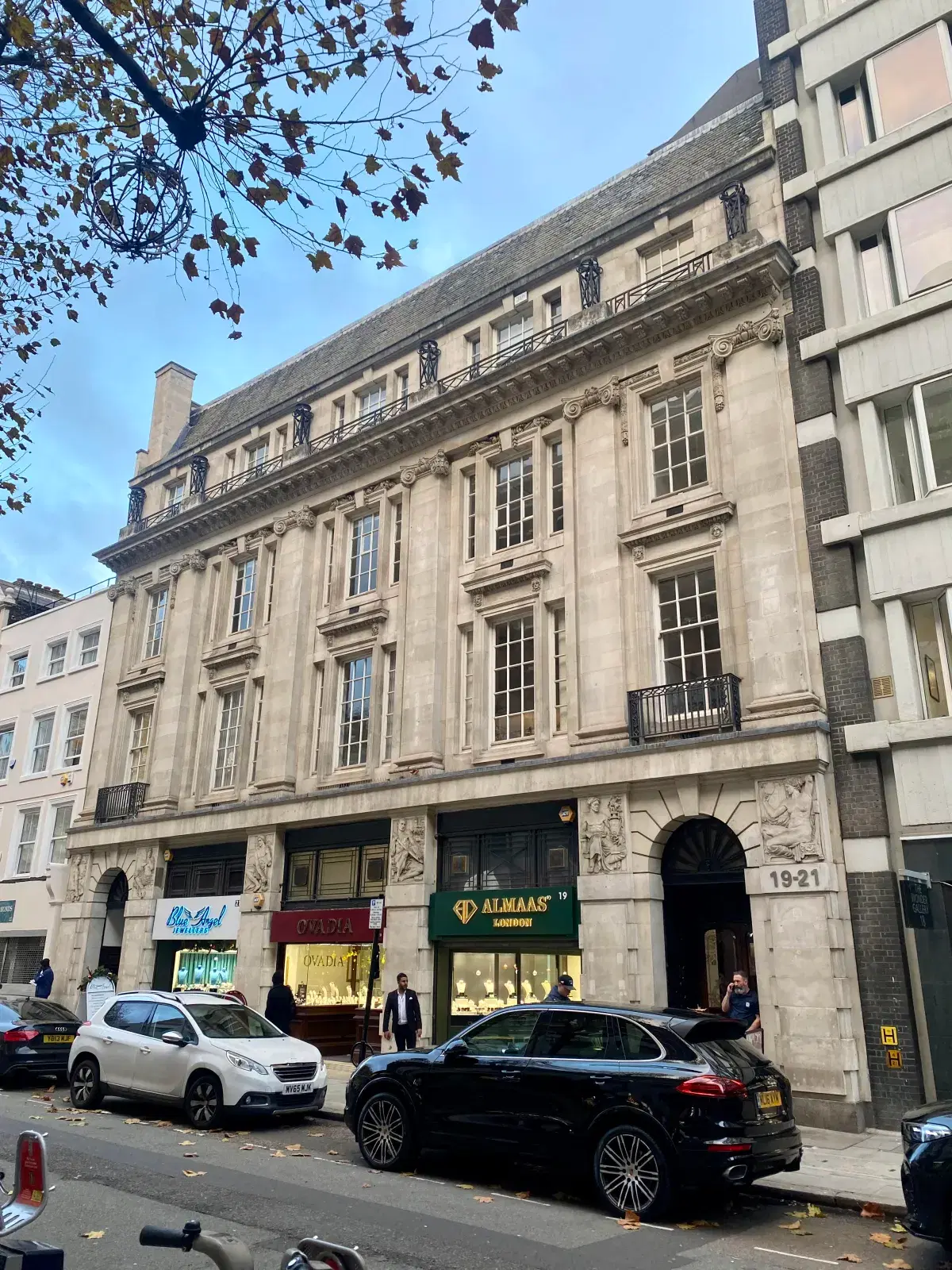
The ornate four-storey stone front of 19–21 Hatton Garden with jewellers at street level19–21 Hatton Garden

Built for jewellers

Look up at 19–21. This Grade II listed building went up in 1905 for the jewellers Stewart Dawson & Co., with carved stone panels across its front. More than a century later it’s still full of jewellery businesses — on Hatton Garden, the trade doesn’t just pass through. It stays.

Photo: “19-21 Hatton Garden, London, December 2022” by No Swan So Fine, CC BY-SA 4.0

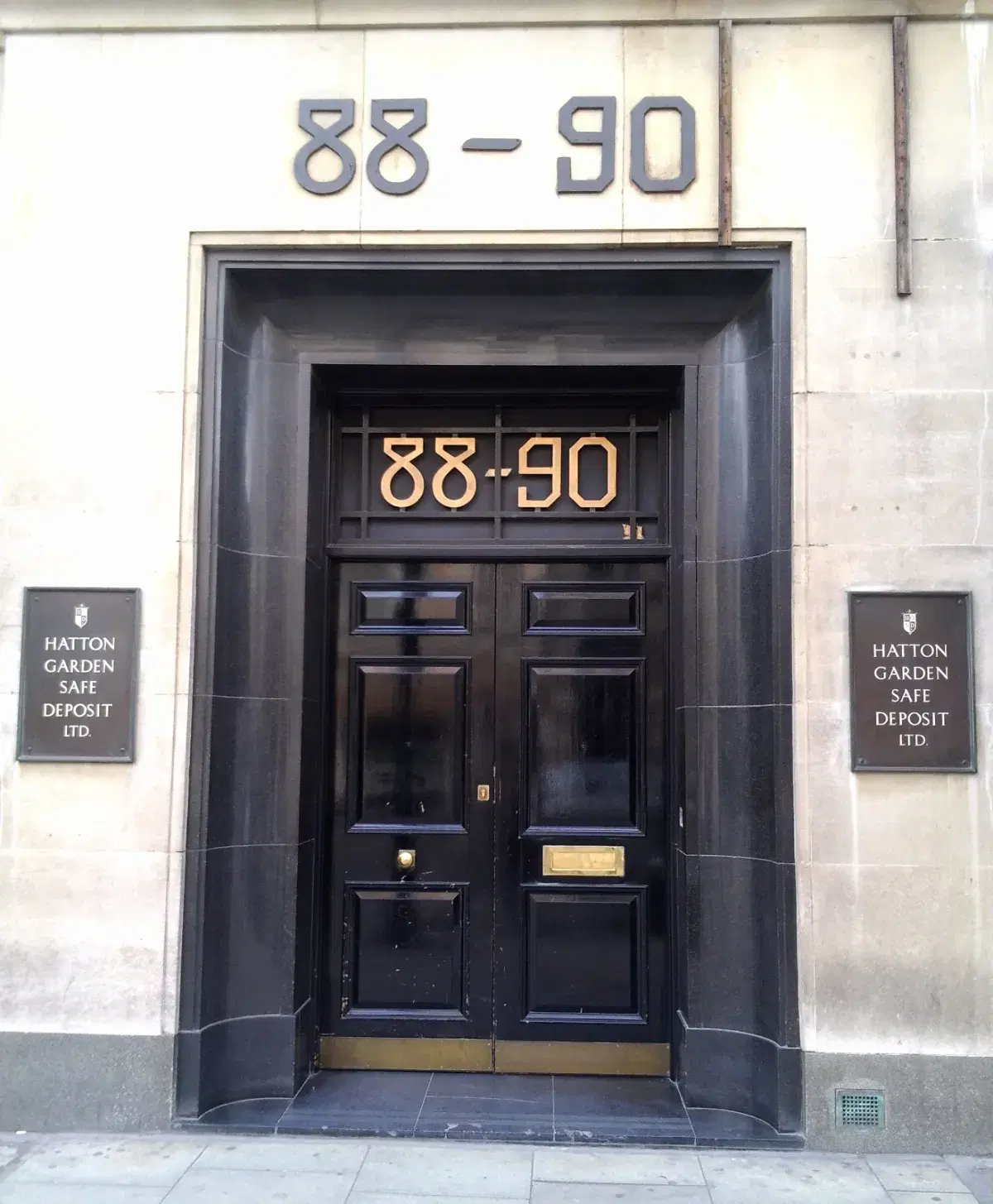
The black double door of 88–90 Hatton Garden with Hatton Garden Safe Deposit plaques either side88–90 Hatton Garden

Behind the black door

Over Easter weekend 2015, a gang of mostly retired thieves went through this building, drilled half a metre of concrete into the Hatton Garden Safe Deposit vault and emptied 73 boxes. The haul was put at around £14 million — much of it never recovered.

Photo: “88-90 Hatton Garden, front door” by RHaworth, CC BY-SA 4.0

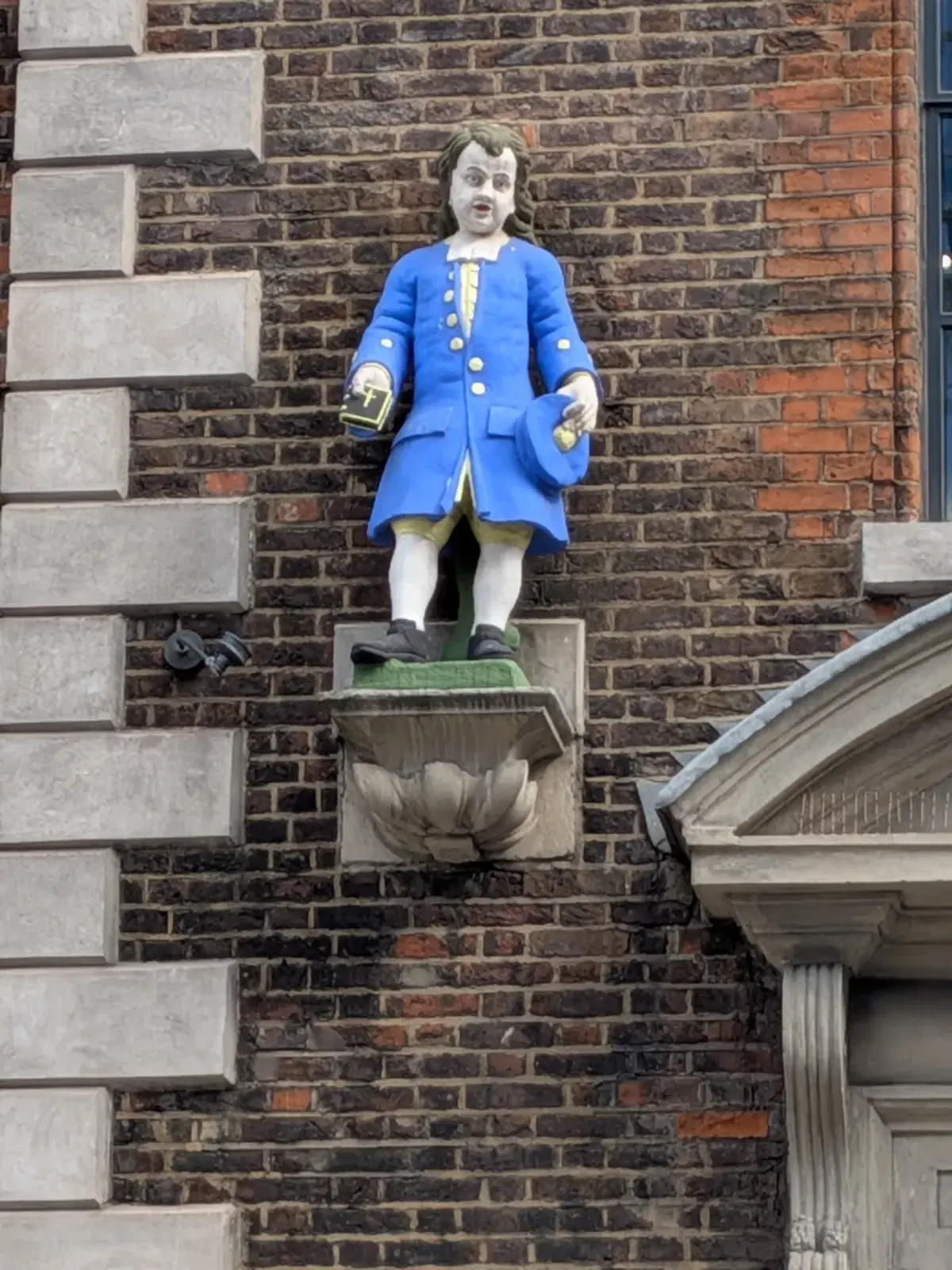
A painted statue of a charity-school boy in a blue coat on a brick wallCorner of St Cross Street

The charity children

Two painted figures of children in blue coats watch the corner of St Cross Street. They mark a charity school that opened here in 1696, when the parish’s poor children wore blue uniforms. Look up as you pass — most people on their way to a jeweller never notice them.

Photo: “Bluecoat Boy statue, Wren House, Hatton Garden” by gruntzooki, CC BY-SA 4.0

The Italian connection

The craftsmen who built the quarter

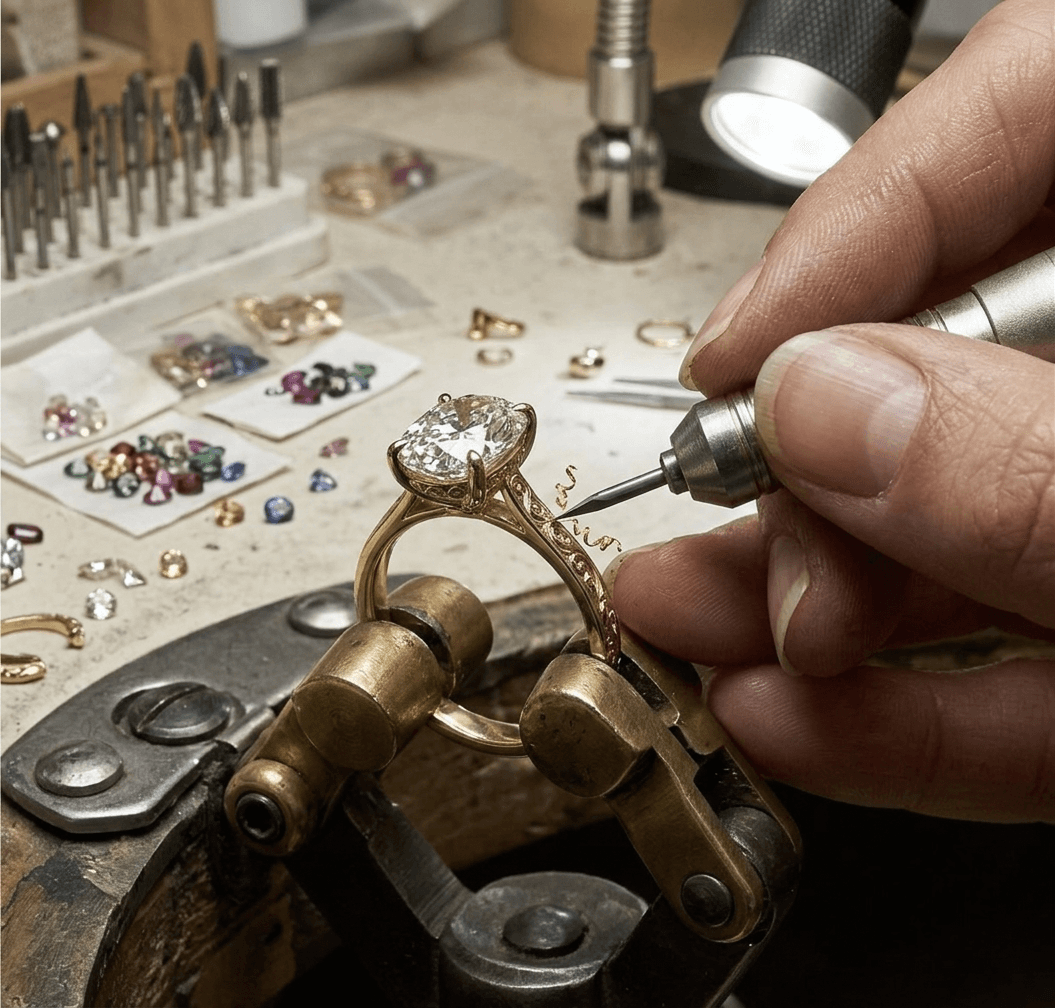
Hatton Garden artisan at workbench — the tradition of handcraft continues

The story of Hatton Garden as a jewellery centre doesn't actually start on Hatton Garden. It starts a few streets east, in Clerkenwell, where a large Italian immigrant community settled in the early 1800s. This area — sometimes called London's “Little Italy” — was home to craftsmen from the Lombardy and Piedmont regions of northern Italy, people with generations of experience in metalwork, clockmaking, and precision instrument manufacturing.

These skills translated directly into gem cutting, setting, and jewellery fabrication. By the 1830s and 1840s, Italian workshops were clustered around Clerkenwell Road and Hatton Garden, and the area began to attract diamond dealers and precious stone traders who needed skilled labour nearby. The relationship was symbiotic: dealers brought the stones, craftsmen turned them into finished pieces, and the concentration of both in one district created a market that customers could walk through.

The timing mattered. The 1860s and 1870s saw massive diamond discoveries in South Africa — first in Kimberley, then across the wider region. London, as the capital of the British Empire, was the natural port of entry for rough stones heading to European markets. Hatton Garden's cutters and dealers were perfectly positioned. They weren't just making jewellery for local customers — they were processing a significant portion of the world's diamond supply.

By the late 1800s, the identity was set. The London Diamond Bourse and Club — the formal trading body for the UK diamond industry — established itself in the area, and Hatton Garden was recognised as the undisputed centre of the British gem trade. It wasn't the only jewellery district in London (the Burlington Arcade and Bond Street served a different market), but it was the place where the actual work happened — cutting, polishing, setting, and dealing.

The diamond quarter

How one street became the centre of the UK diamond trade

By the early 20th century, Hatton Garden had achieved something rare in commerce: a self-reinforcing cluster. When every stage of the diamond supply chain exists within walking distance — rough dealers, cutters, polishers, setters, wholesalers, and retailers — the street becomes more valuable than the sum of its parts. A customer could walk down one side of the road, compare prices from six dealers, commission a setting from a workshop upstairs, and collect the finished piece a week later. No other street in Britain offered that.

The two World Wars disrupted but didn't destroy the trade. Parts of the area were damaged during the Blitz — the Luftwaffe targeted nearby Clerkenwell and Holborn — but the jewellery businesses returned and rebuilt. The post-war decades saw Hatton Garden consolidate its position. The London Diamond Bourse continued to operate from the street, and the area attracted a new wave of traders, including significant Orthodox Jewish and Indian communities that brought their own long traditions in the diamond trade.

By the late 20th century, the street had over 300 jewellery-related businesses packed into roughly 200 metres. Ground-floor retail shops sat alongside first-floor workshops, basement vaults, and upper-storey trading offices. The diversity was remarkable: you could find a dealer in loose diamonds next door to a family-run wedding ring workshop next door to a specialist antique jeweller. The street was — and still is — more like a bazaar than a shopping centre.

This density created competition, which kept the trade honest (to a degree). A buyer could get three quotes in ten minutes. A dealer who consistently overcharged would lose business to the shop next door. The marketplace exerted its own pressure — not perfect, but more transparent than buying from an isolated jeweller with no nearby competition.

Then & now

The same streets, a century or more apart

Three views around Hatton Garden, lined up so the same building sits in the same place. Drag across to watch the neighbourhood change.

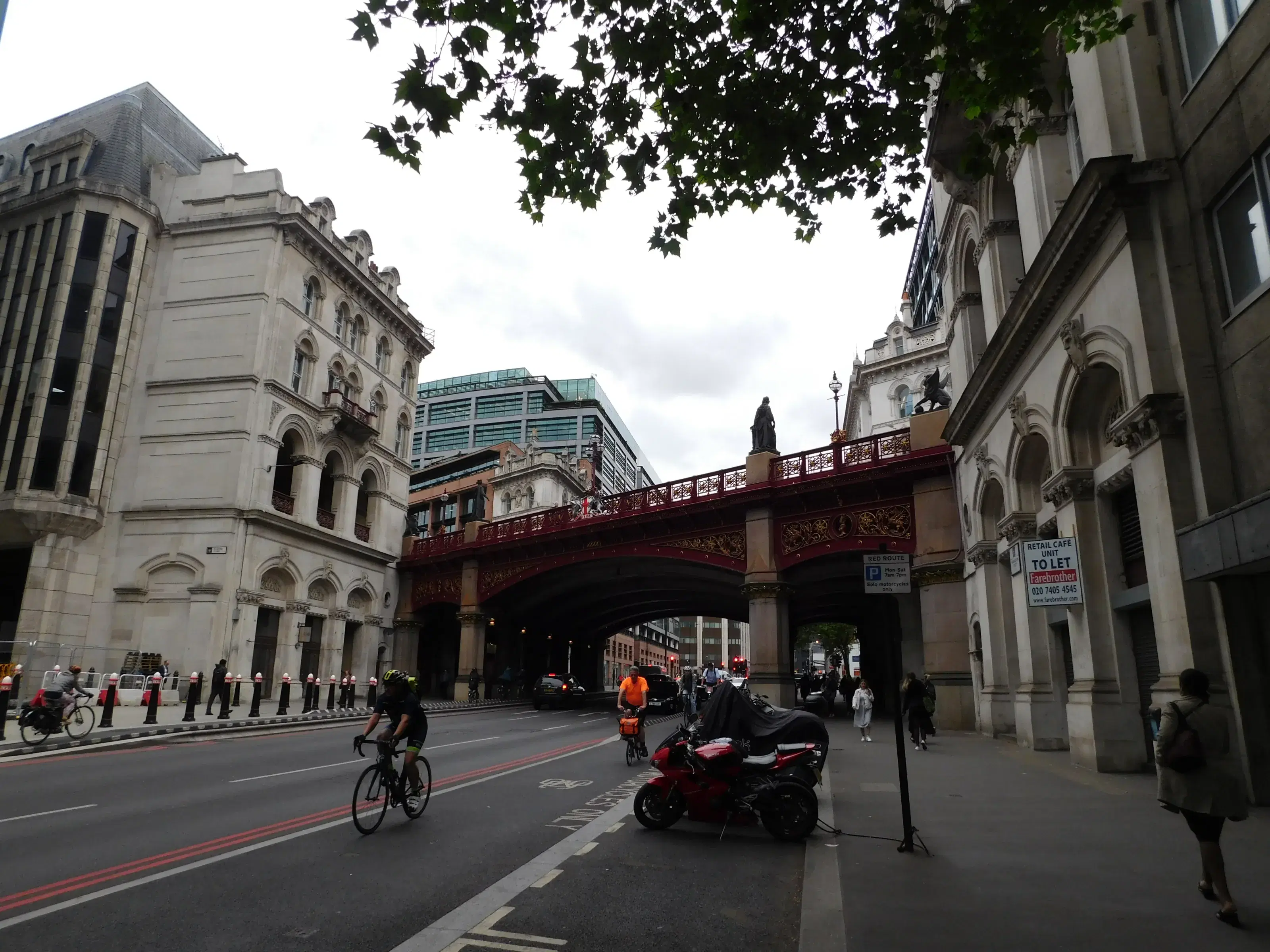
Holborn Viaduct in 2019, seen from Farringdon Street with cyclists and traffic beneath
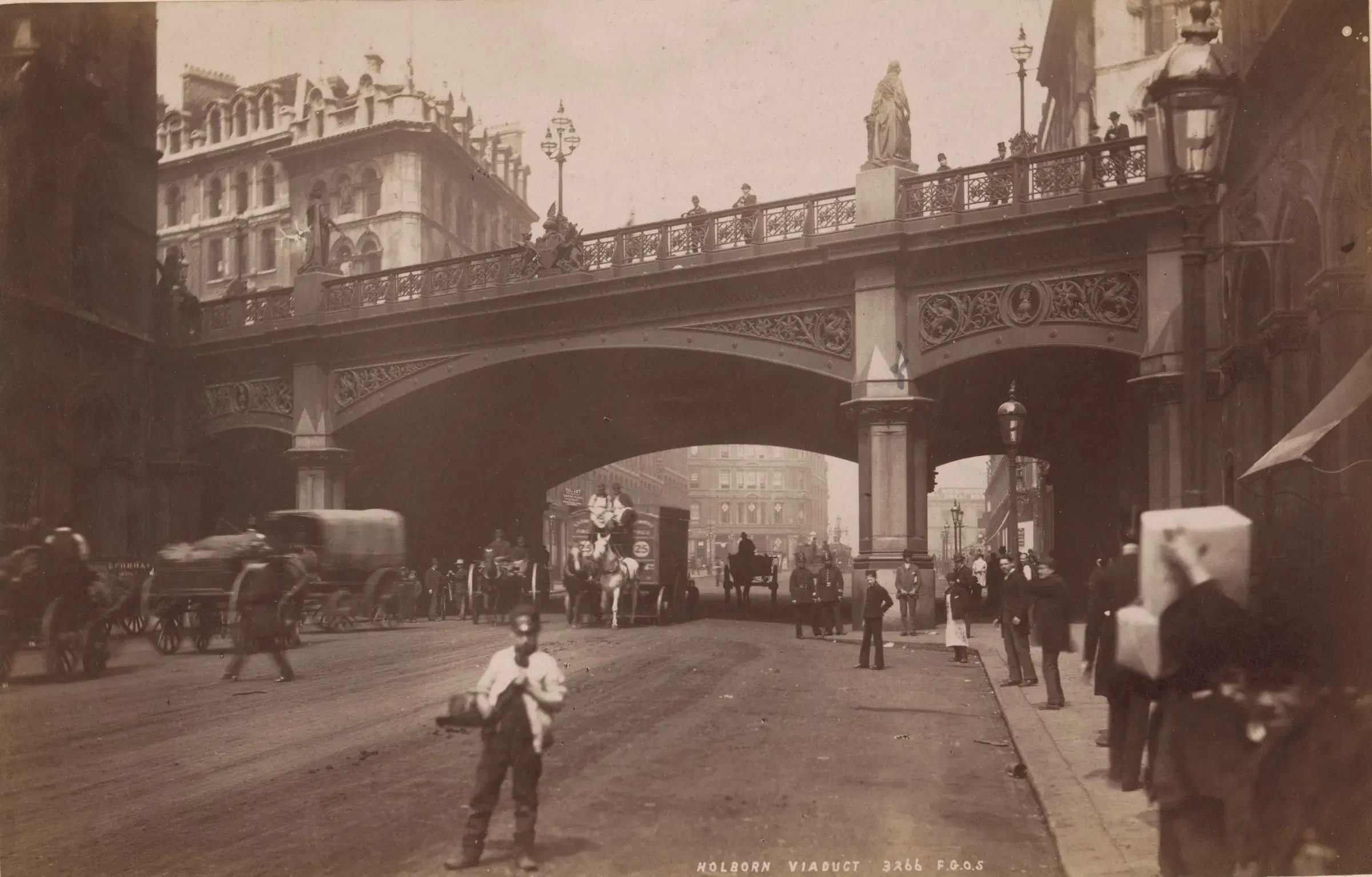
Photograph of Holborn Viaduct around 1895, with horse-drawn carts and pedestrians on Farringdon Street beneath
c. 18952019

Two minutes from the south end of Hatton Garden

Holborn Viaduct

Opened by Queen Victoria in 1869, the viaduct carried the road over the Fleet valley to Holborn Circus, at the foot of Hatton Garden. In the 1890s the street beneath still ran on horses and handcarts. The statues on the parapet haven’t moved.

Drag the handle, or use the arrow keys, to compare.

April 2015

The Hatton Garden heist

Over the Easter bank holiday weekend in April 2015, a group of men broke into the Hatton Garden Safe Deposit Company at 88–90 Hatton Garden. They entered through a lift shaft, descended to the basement, and used a Hilti DD350 diamond-core drill to bore through a half-metre-thick reinforced concrete vault wall. Over the course of the long weekend, they ransacked 73 of the 999 safe deposit boxes inside.

The estimated value of what was taken — cash, jewellery, gold, diamonds, sapphires, and other valuables — was around £14 million, though some estimates have gone higher. Much of it was never recovered. The vault was used by Hatton Garden dealers and traders to store stock overnight and over weekends, making the haul particularly concentrated.

What made the heist famous wasn't just its scale but its cast. The perpetrators were a group of mostly retired criminals, the oldest aged 76 at the time of the burglary. They were caught through a combination of CCTV footage, mobile phone data, and old-fashioned surveillance. The image of elderly men hauling wheelie bins full of stolen gems captured the public imagination in a way that more violent crimes rarely do.

Seven men were sentenced at Woolwich Crown Court in March 2016. Terry Perkins, Daniel Jones and John “Kenny” Collins got seven years; the ringleader, Brian Reader, then 76, got six years and three months. The insider known as “Basil” was caught in 2018. The heist has since been the subject of books, three feature films, an ITV drama and a Channel 4 documentary. Perkins died in prison in 2018, and Reader died in 2023.

For Hatton Garden itself, the heist was both a crisis and, unexpectedly, a branding event. The street was already famous within the jewellery world, but the heist made it a household name. Search interest in “Hatton Garden” spiked by over 500% in the weeks after the burglary and has remained elevated since. Tourists now visit the street partly because of the heist. In 2026 the landlord of 88–90 applied to open a heist-themed wine bar on the site, to objections from local jewellers.

The security conversation that followed was significant. Dealers upgraded vaults, moved to safer storage arrangements, and the insurance industry tightened requirements for businesses on the street. The safe deposit model — boxes held by a third party without detailed contents records — largely disappeared from Hatton Garden after 2015.

Read the full story of the heist: the timeline, the gang, how they were caught and what's still missing.

For London's other great diamond stories, from the Koh-i-Noor to the foiled Millennium Dome raid, see our guide to famous diamonds.

The new era

Online-first jewellers and the generation that does its homework

The most significant change to Hatton Garden in the last two decades isn't a heist or a renovation. It's a shift in how people buy. A new generation of jewellers has arrived on the street — companies like MOH London and 77 Diamonds — that operate on a fundamentally different model from the traditional walk-in shop.

The traditional model works like this: a jeweller holds stock in display cases, a customer walks in, and the jeweller guides them through the options that happen to be in the shop that day. The selection is limited to what fits in the display — typically 20 to 50 pieces. The customer sees what the jeweller chooses to show them. Pricing is discussed in person, often without a clear upfront number.

The online-first model inverts this. Instead of holding stock, the jeweller provides access to databases of tens of thousands of certified diamonds, each with detailed specifications, imagery, and pricing. The customer uses ring builder tools to configure exactly what they want — choosing the stone shape, the metal, the setting style, and seeing the price in real time. By the time they book an in-person consultation, they already know what they want and what it costs. The visit is confirmation, not exploration.

This shift is driven by buyers, not by the industry. Younger customers — millennials and Gen Z — research purchases online before committing. They read reviews, compare specifications, and want to understand what they're paying for before they walk into a shop. The idea of entering a jeweller with no preparation and relying entirely on the salesperson's guidance feels, to this generation, like buying a car without checking the price first.

Lab-grown diamonds have accelerated the change. These are chemically and physically identical to mined diamonds — same crystal structure, same optical properties, same hardness — but they're created in a laboratory rather than extracted from the earth. They typically cost 60–80% less than mined diamonds of equivalent grade. The traditional jewellery industry was slow to embrace them, partly because lower prices mean lower margins. But online-first jewellers, which compete on transparency rather than mystique, adopted lab-grown early. For buyers who care about what the ring looks like rather than where the carbon atoms came from, lab-grown has been a quiet revolution.
Hatton Garden today

Still evolving, still the centre

The dark timber frontage of Ye Olde Mitre pub in its alley off Hatton Garden
Ye Olde Mitre, hidden down an alley between Hatton Garden and Ely Place. A pub has stood here since 1546.

Photo: “Ye Olde Mitre” by JRennocks, CC BY-SA 4.0

Walk down Hatton Garden today and you'll see the old and the new side by side. Traditional jewellers with window displays of gold chains and engagement rings sit next to frosted-glass consultation suites where everything happens by appointment. Workshops still operate on the upper floors — you can hear the sound of polishing wheels if you stop and listen. The London Diamond Bourse still has its address on the street. The pubs where dealers closed deals over a pint are still there, though the clientele has shifted.

The numbers remain remarkable. Over 300 jewellery businesses operate on or within a few minutes' walk of the street. Hatton Garden accounts for the majority of the UK's diamond trade by volume. An estimated £3 billion worth of diamonds pass through the area each year. It is, by any measure, the most concentrated jewellery market in the United Kingdom and one of the most significant in Europe.

The Crossrail station at Farringdon — which opened in stages between 2022 and 2023 — has improved access significantly. Hatton Garden is now a short walk from one of London's best-connected transport hubs, making it easier for buyers from across London and the southeast to visit. The area around the street has changed too: new restaurants, coffee shops, and bars have arrived, and the Leather Lane street food market, just a minute's walk away, draws lunchtime crowds that spill into the jewellery shops.

What hasn't changed is the fundamental proposition. Hatton Garden exists because concentration creates competition, and competition is good for buyers. Whether you prefer to walk into a shop and browse, or research online and visit by appointment, the street offers more choice, more expertise, and more competitive pricing than any isolated jeweller can match. The methods are evolving. The advantage is the same as it was in 1880.

Thinking about visiting?

If you're planning a trip to Hatton Garden — whether for the first time or the fifth — we wrote a complete visiting guide covering how to get there, what to expect, and how to make the most of your time on the street.

Read the visiting guide

Common Questions

Why is Hatton Garden famous for diamonds and jewellery?+

Hatton Garden became the centre of the UK diamond trade through a combination of geography, immigration, and timing. Italian craftsmen brought gem-cutting skills to the area in the 1800s, and London's position as a global trading hub meant rough diamonds from South Africa flowed through the city. The concentration of skilled workers, dealers, and workshops in one street created a self-reinforcing cluster that has lasted over 150 years. Today, over 300 jewellery businesses operate on or around the street.

How old is Hatton Garden?+

The land has been recorded since the 1200s, when it was the garden estate of the Bishops of Ely. It became a street in the mid-1600s after the Ely estate was broken up following the English Civil War. The jewellery trade arrived in the 1830s with Italian immigrant craftsmen and has been there continuously for nearly 200 years.

What happened in the Hatton Garden heist?+

Over the Easter weekend in April 2015, a group of mostly retired criminals broke into the Hatton Garden Safe Deposit Company at 88-90 Hatton Garden. They drilled through a half-metre-thick concrete vault wall using a Hilti DD350 diamond-core drill, then ransacked 73 safe deposit boxes. The estimated value of stolen goods was around £14 million. The perpetrators — the oldest was 76 — were caught and sentenced in 2016. Only about £4.3 million has ever been recovered.

Is Hatton Garden still the best place to buy an engagement ring in London?+

Hatton Garden remains the largest concentration of jewellers in the UK, with over 300 businesses. What has changed is how you buy. The street now has two models: traditional showrooms where you walk in and browse display cases, and online-first jewellers where you research, configure your ring, and see pricing before booking an in-person consultation. The combination of competition, expertise, and choice — both traditional and modern — makes it hard to match anywhere else in the country.

Who was Hatton Garden named after?+

The street takes its name from Sir Christopher Hatton (1540–1591), a favourite courtier of Queen Elizabeth I. Hatton was Lord Chancellor of England and, through royal favour, acquired the lease on the Bishops of Ely's London estate — including the garden that would eventually become the street. The bishops were not pleased about losing their property, but Elizabeth insisted.