For her
Women’s wedding rings
Plain and diamond-set bands, and getting one to sit flush with your engagement ring.
Typically £775Read guide
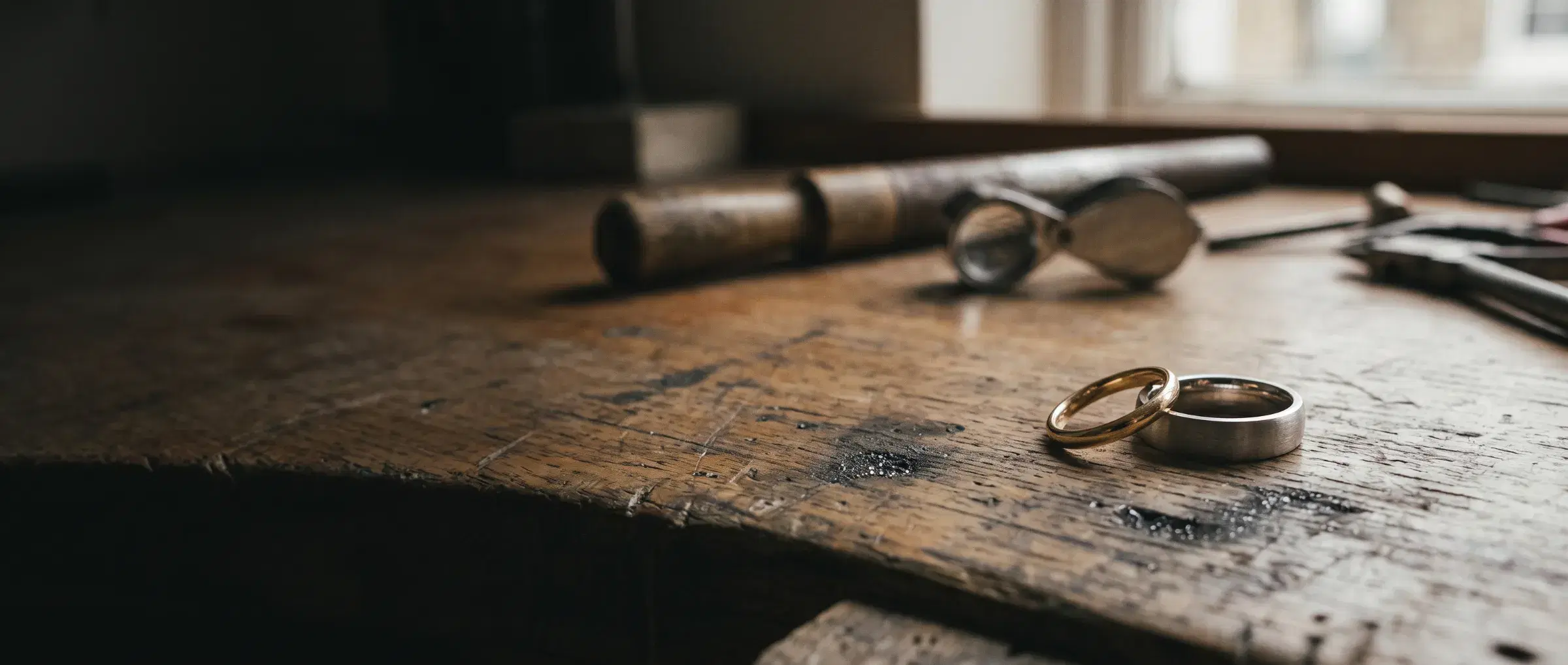
Wedding rings
Your engagement ring got the drama. The wedding band is what you'll wear every day for the rest of your life. Here's how to get it right: matching, sizing, timing, and what bands really cost.
In short: a plain 18ct gold wedding band typically costs about £775 for a slim women's band and £1,699 for a wider men's band in the UK. Match the metal to your engagement ring, take the engagement ring to every fitting, and order six to eight weeks before the wedding.
Start here
Real UK prices, how much of the price is gold, and the width and fit decisions for each.
For her
Plain and diamond-set bands, and getting one to sit flush with your engagement ring.
For him
Widths, metals and band shapes, and why titanium can’t be resized.
For both of you
What a matching pair really costs, and how to make two bands look like a set.
Typical prices for plain 18ct gold bands, UK retail listings, October 2026.
The fit
This is the decision most people underestimate. Your wedding band needs to sit flush against your engagement ring — no gaps, no wobble, no catching. The shape of your engagement ring's setting dictates what band will work.
A classic solitaire with a low setting? Almost any straight band will sit flat against it. A cathedral setting, a halo, or a vintage-style ring with decorative shoulders? You likely need a shaped band — sometimes called a wishbone or contour band — that curves around the engagement ring's profile.
Some people choose to wear the wedding band on the opposite hand to avoid the matching problem entirely. That's a legitimate option, but most prefer the traditional approach of wearing both on the same finger. If you go that route, bring your engagement ring to every appointment. No exceptions.
On metals: ideally, match what your engagement ring is made from. A platinum engagement ring paired with a white gold band will look identical at first, but over time the metals wear at different rates. The platinum will scratch the softer gold. If you want mixed metals for aesthetic reasons, discuss it with your jeweller so you understand the long-term maintenance.
Not sure what metal your engagement ring is? Our metal types guide explains the differences and how to identify what you have.
Style and substance
Best for: people who work with their hands, prefer understated jewellery, or want the engagement ring to take centre stage
Best for: people who want the wedding band to make its own statement alongside the engagement ring
One practical note: if you're considering a diamond-set band, check how it sits against your engagement ring before committing. Some pave settings catch on engagement ring prongs. Ask your jeweller to show you the two rings together on your hand, worn as a pair, before placing the order.
Buying an eternity ring for an anniversary? Find out which anniversary is next and the traditional theme for each year.
His ring too
Men's wedding rings get less attention, but you're still wearing it every day. Hatton Garden jewellers offer a wider range than most high street shops, and the quality is noticeably better.
The main decisions are width, profile, and finish. Width runs from 4mm (slim, modern) to 8mm (bold, traditional). Profile options include flat (contemporary, sits flush), court (domed outside, curved inside for comfort), and D-shape (flat inside, domed outside). Most men prefer court profile for comfort — it slides on and off more easily.
On materials: 18ct yellow gold is the classic. White gold and platinum give a modern look. Palladium is lighter than platinum at a lower price point with a similar colour. Titanium is the lightest and most scratch-resistant, but it cannot be resized — if your finger changes, you need a new ring.
Finishes make a bigger difference than most people expect. A polished finish looks sharp initially but shows scratches within weeks. Brushed or matte finishes actually age better because scratches blend into the texture. Hammered finishes give a distinctive, handcrafted look.
Typical UK prices, October 2026: about £1,700 for a plain 18ct gold or platinum band, and about £100 for titanium or tungsten. Full breakdown, and how much of the price is gold, in our men's wedding rings guide.
Getting the size right
Your wedding ring should match the exact size of your engagement ring finger — but do not assume the size is the same. Fingers change with seasons, time of day, and even weight fluctuations. Get re-measured.
Important: measure with your engagement ring on. Your wedding band sits next to it, and wearing a ring on a finger slightly changes the effective circumference for additional rings. A jeweller who knows this will measure accordingly. One who does not may give you a band that is too tight once both rings are on together.
For the most accurate reading, get measured in the afternoon (fingers swell slightly throughout the day) and at room temperature (cold weather shrinks fingers, warm weather expands them). If your measurement falls between two sizes, go up, not down. A slightly loose band is more comfortable than one that digs in during summer.
If you cannot make it to Hatton Garden for a fitting, use our Ring Size Finder tool for a reliable at-home measurement. Just remember: nothing replaces a proper in-person fitting for the final purchase.
Timing
Six to eight weeks before the wedding. That is the minimum. Anything less and you are relying on luck, rush fees, or both.
Plain bands are the fastest — some Hatton Garden jewellers can turn around a standard gold or platinum band in two to three weeks. But that assumes your size is confirmed and the metal is in stock. Diamond-set bands take longer because the stones need to be sourced, set, and finished. Shaped bands that are custom-made to fit your engagement ring take the longest.
Spring and summer are peak wedding season. Hatton Garden jewellers see their highest order volumes between March and August. If your wedding is in July and you walk in during June expecting a three-week turnaround, you may be disappointed. Order early.
If you want an engraving — a date, initials, a short message — add an extra week. Some jewellers include engraving in the standard timeline, but most do not.
One advantage of buying your wedding rings from the same jeweller who made your engagement ring: they already have your specs, know the ring profile, and can ensure a perfect match without you bringing the ring in repeatedly. Many Hatton Garden jewellers design their wedding ring collections specifically to pair with their engagement ring settings, which simplifies the matching process.
You have the knowledge. Now narrow down what you want. Use our tools to check your size and explore styles before visiting Hatton Garden in person.
Not necessarily, but it matters for durability. If your engagement ring is platinum and your wedding band is white gold, the harder platinum will gradually wear against the softer gold over years of daily contact. Matching metals avoids this. That said, some people deliberately mix metals for a layered look — just know the maintenance trade-off. If you go mixed, have your jeweller check that the rings sit flush together.
Six to eight weeks minimum. Standard plain bands can sometimes be ready in two to three weeks, but diamond-set bands, shaped bands designed to fit around your engagement ring, or anything bespoke will take longer. If you want an engraving, add another week. Do not leave this until the last month — Hatton Garden jewellers get busy in spring and summer wedding season, and turnaround times stretch.
Yes. Always bring it. Your wedding band needs to sit flush against your engagement ring without gaps or rubbing. Some engagement ring settings — cathedral, halo, vintage — have profiles that a standard flat band will not sit neatly against. Your jeweller needs to see the ring to recommend the right band shape. If you bought your engagement ring from a Hatton Garden jeweller, they may already have the specs on file.
In UK listings we checked in October 2026, a plain 18ct gold women’s band typically cost about £775 and a diamond-set band about £995, though diamond bands ran from £330 to £6,500. A plain 18ct gold men’s band typically cost about £1,700, because it’s wider and heavier. Decide early whether you want diamonds in the band: diamond-set bands are harder to resize.
Absolutely. Most Hatton Garden jewellers carry men's bands in gold, platinum, palladium, and titanium, usually 4mm to 8mm wide in flat, court or D-shape profiles. Brushed, hammered and matte finishes are increasingly popular. In UK listings we checked in October 2026, a plain 18ct gold men's band typically cost about £1,700 and titanium or tungsten about £100. See our men's wedding rings guide for the full price breakdown.
Everything else you need to know before your Hatton Garden visit.
The complete walkthrough for buying an engagement ring in Hatton Garden
White gold vs platinum vs rose gold — durability, colour, and what changes over time
Three reliable methods for finding the right ring size, including measuring at home
How to get there, what to expect, and how to make the most of your visit