Ring & Diamond Quiz
NewEngagement ring, wedding band or a diamond on its own? A few quick questions give you a starting spec that suits them, with real prices

New generation buyer's guide
Over 300 jewellers. Zero transparency — until now. We built the tools and wrote the guides that the industry never wanted you to have.
Interactive tools
Design your ring, find her size, check your budget — all before setting foot on Hatton Garden. Walk in knowing exactly what you want.
Engagement ring, wedding band or a diamond on its own? A few quick questions give you a starting spec that suits them, with real prices
Choose your shape, metal, and setting — see it in 3D. Save your design and get quotes from Hatton Garden jewellers
Find their ring size without asking. Borrow a ring they already wear, use the string method, or ask someone who knows
Enter what you want to spend — we'll show you exactly what you can get in Hatton Garden at that level
Countdown timer, checklist, London venue ideas, and a personalised timeline so nothing gets missed
Buyer's guides
Written by people who've been through it — not by people trying to sell you something.
What you actually need to know — prices, styles, and how to walk in with confidence
How to read a certificate, what the 4Cs actually mean for how it looks, and what to ask
Same crystal structure, same sparkle, fully certified. Here's the full picture — including the trade-offs
How to get there, what to expect, how many shops to visit, and how to handle pressure
Understanding the landscape
Hatton Garden isn't one thing anymore. The street has evolved into two distinct models — and understanding the difference means you'll know exactly what to expect when you walk in.
Best for: people who want to touch and try before deciding
Best for: people who want to research, compare, and know exactly what they're getting before committing
Neither model is better. It depends on how you like to make decisions. Some people want to hold it first. Others want to see every option before narrowing down. Hatton Garden has both.
Stories of the street
800 years of history in one short street. Swipe through it.
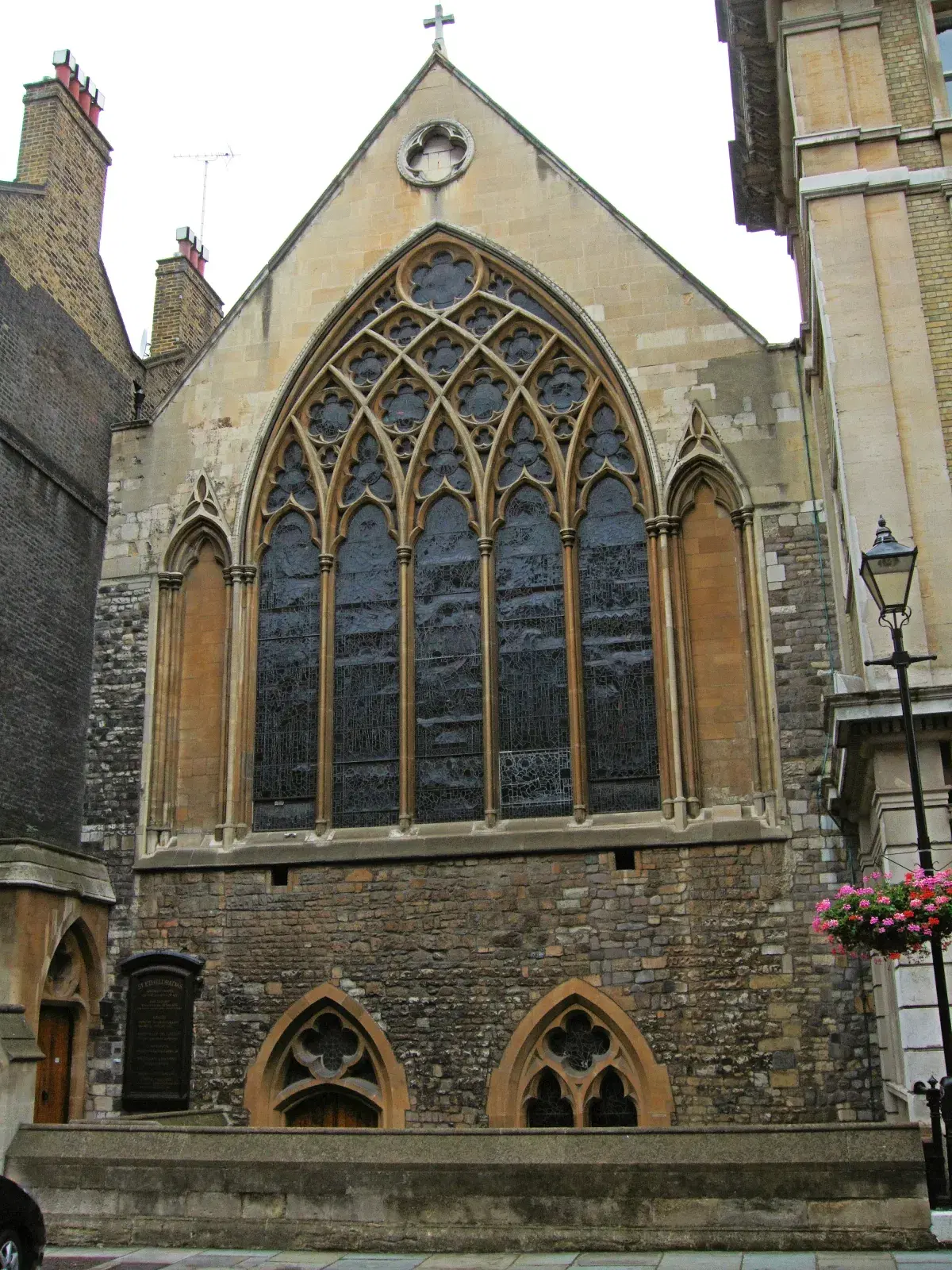 Ely Place
Built in the 1250s as the private chapel of the Bishops of Ely, St Etheldreda’s is one of the oldest Catholic churches in England. The bishops’ palace and gardens once covered this whole area — Hatton Garden grew out of their land. Shakespeare even mentions the strawberries grown here, in Richard III.
Photo: “St Etheldreda's Church, Ely Place, London” by Jim Linwood, CC BY 2.0
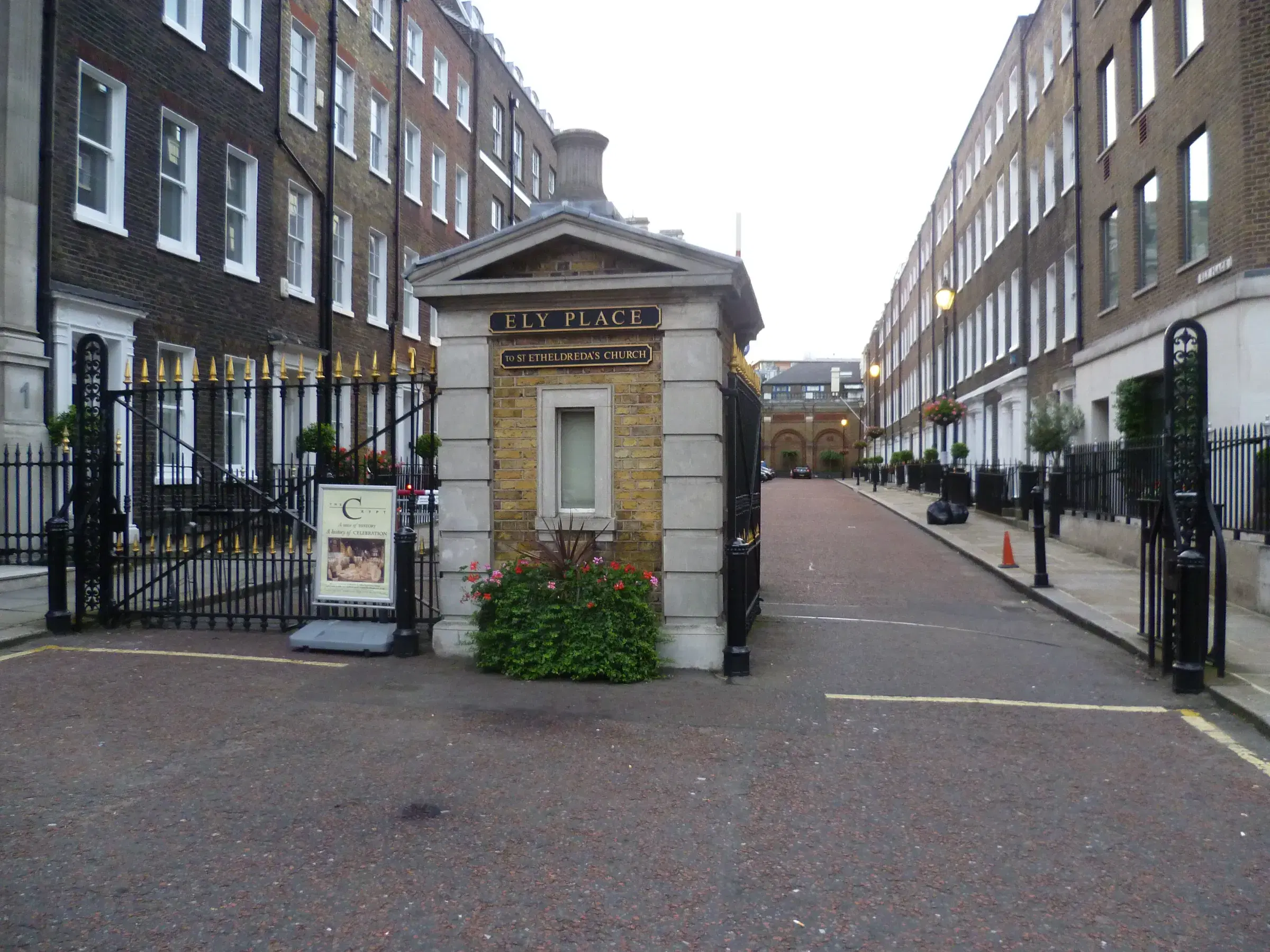 Off Charterhouse Street
Step through the gatehouse and you’re on a private road built over the bishops’ old palace grounds. Local legend says it stayed technically part of Cambridgeshire for centuries, and that the police needed an invitation to come in. Whatever the truth, the gates and lodge are still there.
Photo: “The entrance to Ely Place, Holborn” by Marathon / Geograph, CC BY-SA 2.0
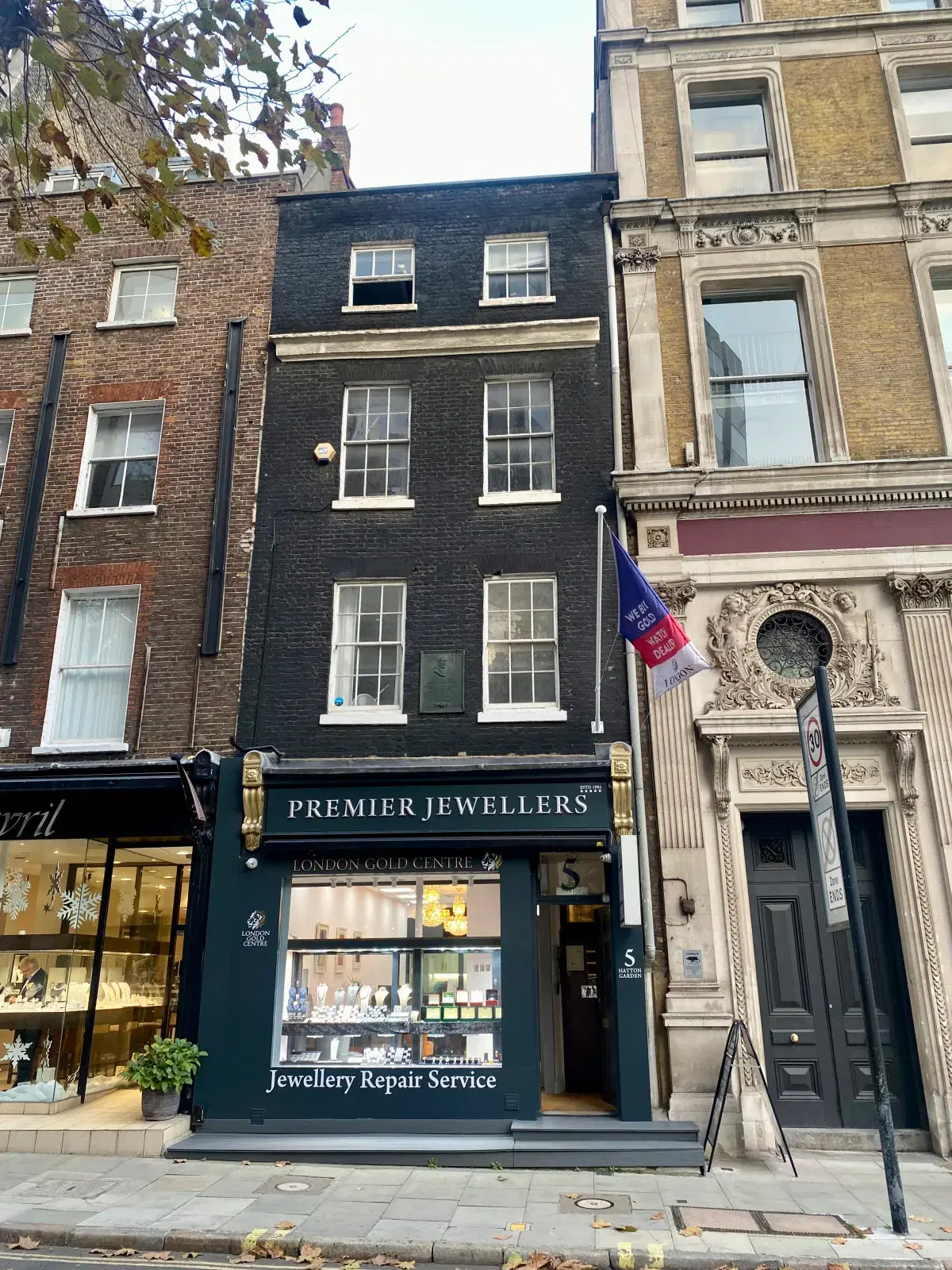 5 Hatton Garden
A bronze plaque on the first floor marks where Giuseppe Mazzini, the exiled champion of a united Italy, lived and worked. He wasn’t the only Italian here: these streets were filling with Italian craftsmen — the community whose metalwork and gem-cutting skills turned Hatton Garden into London’s jewellery quarter.
Photo: “5 Hatton Garden, London, December 2022” by No Swan So Fine, CC BY-SA 4.0
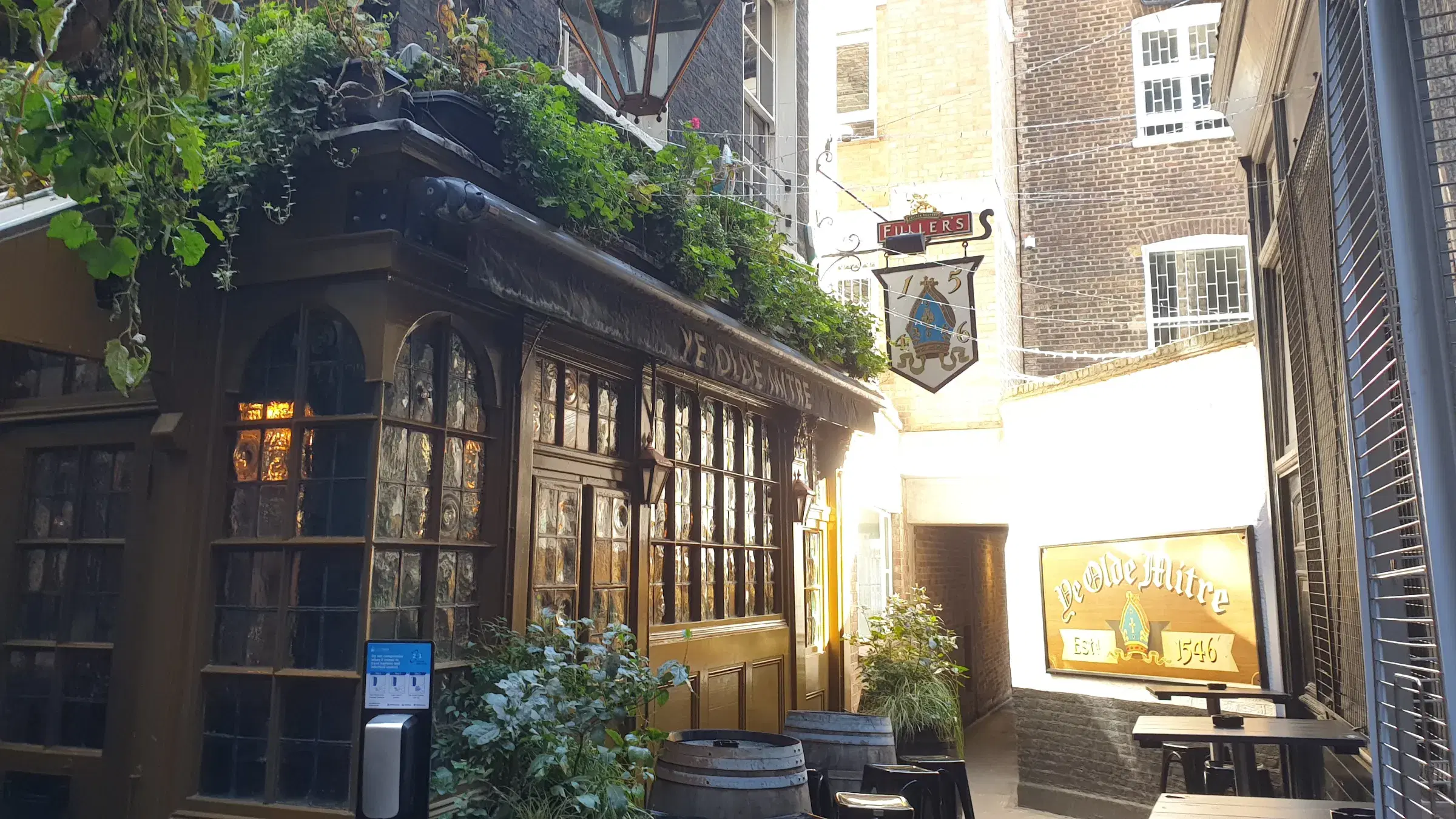 Between 8 and 9 Hatton Garden
Down a passage most people walk straight past, Ye Olde Mitre has been serving since 1546 — first for the servants of the bishops’ palace. Inside is what’s said to be the trunk of an old cherry tree. Legend has it Elizabeth I danced around it, and that it marked the edge of Christopher Hatton’s garden.
Photo: “Ye Olde Mitre” by JRennocks, CC BY-SA 4.0
 19–21 Hatton Garden
Look up at 19–21. This Grade II listed building went up in 1905 for the jewellers Stewart Dawson & Co., with carved stone panels across its front. More than a century later it’s still full of jewellery businesses — on Hatton Garden, the trade doesn’t just pass through. It stays.
Photo: “19-21 Hatton Garden, London, December 2022” by No Swan So Fine, CC BY-SA 4.0
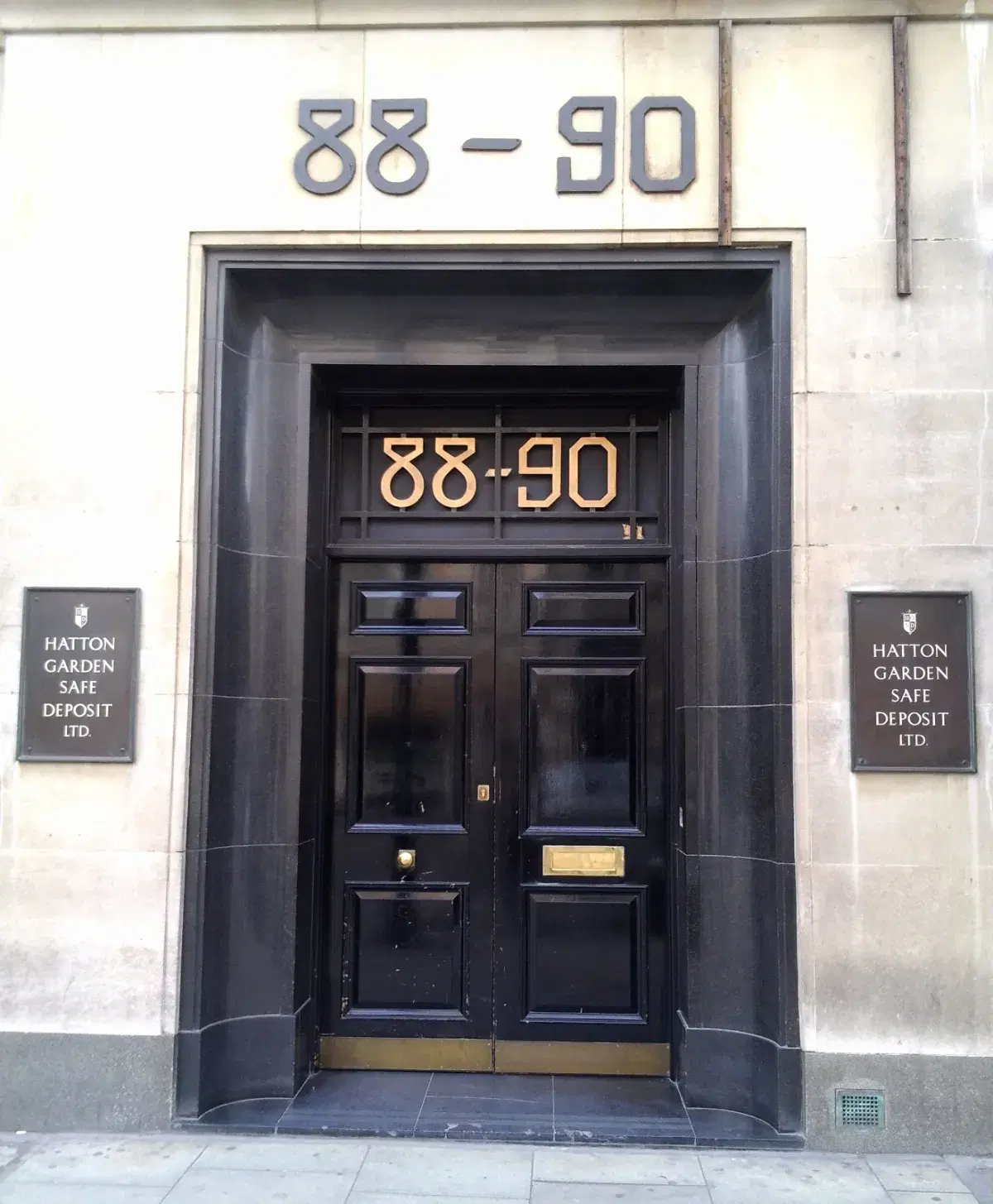 88–90 Hatton Garden
Over Easter weekend 2015, a gang of mostly retired thieves went through this building, drilled half a metre of concrete into the Hatton Garden Safe Deposit vault and emptied 73 boxes. The haul was put at around £14 million — much of it never recovered.
Photo: “88-90 Hatton Garden, front door” by RHaworth, CC BY-SA 4.0
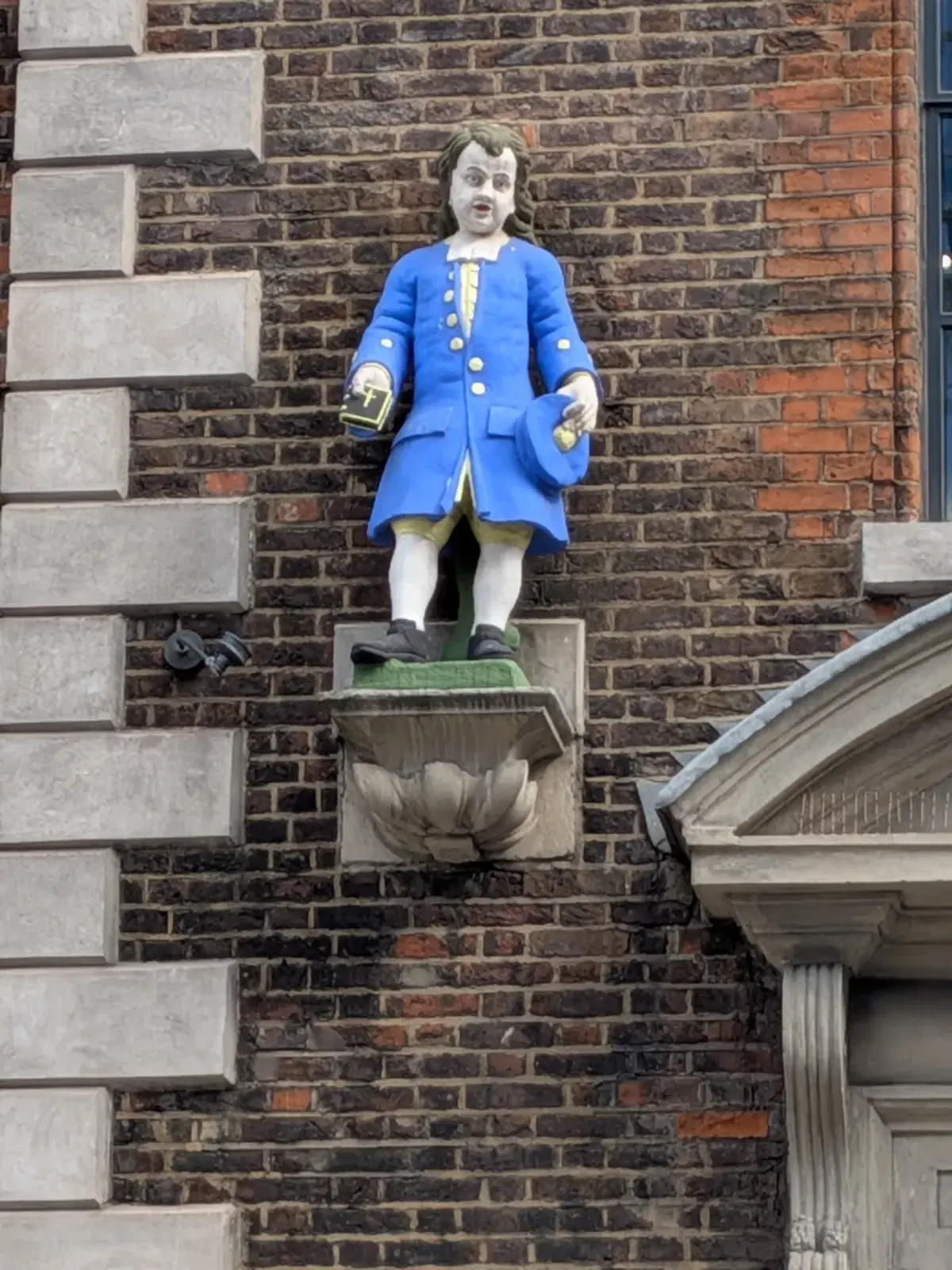 Corner of St Cross Street
Two painted figures of children in blue coats watch the corner of St Cross Street. They mark a charity school that opened here in 1696, when the parish’s poor children wore blue uniforms. Look up as you pass — most people on their way to a jeweller never notice them.
Photo: “Bluecoat Boy statue, Wren House, Hatton Garden” by gruntzooki, CC BY-SA 4.0
Where to go
Each one is different. We've included both showroom and online-first options so you can pick the experience that suits you.
Online-first. Their ring builder lets you configure your exact ring from 1,000,000+ GIA and IGI certified diamonds, see the price upfront, then book a consultation to see it in person. Full transparency before you walk in.
One of the UK's largest online diamond jewellers. Huge certified diamond database with detailed specs and imagery. Technology-driven — you do the research online, then visit their consultation suite by appointment.
Walk-in showroom with display cases and a hands-on consultation experience. If you want to try rings on and talk to someone face-to-face without doing homework first, this is the traditional route.
Traditional Hatton Garden shop with physical displays. Walk in, browse the cabinets, talk to the staff. Good for people who want the classic jeweller experience without appointments.
Old guides gave you textbook definitions. We give you what actually matters for making your decision.
The complete walkthrough — what to decide first, what can wait, and what doesn't matter as much as you think
Forget the gemology lecture. Here's what affects how it looks on her hand — and what's just on paper
Real price ranges by ring type, metal, and carat. Because 'contact for pricing' helps nobody
Same stone scientifically. Different story emotionally. Here's everything — including the parts jewellers leave out
Borrow a ring she already wears, use the string trick, or ask her best friend. Three methods that work
Durability, colour over time, maintenance, and what actually looks different after a year of wearing it
Traditional showroom jewellers like Queensmith and Diamond Palace have physical display cases — you walk in, browse what's on display, and talk to staff. Online-first jewellers like MOH London and 77 Diamonds invest in technology instead — ring builders, 360° diamond viewers, databases of over 1,000,000 certified stones. You do your research online, configure exactly what you want, see the price upfront, then book a consultation. The showroom model gives you 20 rings in a glass cabinet. The online model gives you every certified diamond available, configured to your specs. Different approaches — neither is better, it depends on how you like to shop.
Depends on the type of shop. Traditional display stores welcome walk-ins — just push the door open. Online-first jewellers like MOH London and 77 Diamonds work by appointment because your consultation is personalised to the ring you've already designed online. For the best experience: do your research online first, narrow down what you want, then book appointments with 2-3 jewellers to see it in person.
Transparency. Every reputable Hatton Garden jeweller should show you a GIA or IGI certificate for your diamond — this is a third-party grading report that confirms exactly what you're getting. Compare like-for-like: same carat, cut, colour, clarity across 3-4 shops. Online-first jewellers typically show certificates and pricing upfront on their websites. If any shop won't show you the certificate or won't give you a clear price, that tells you something.
Business model. A jeweller with a large showroom, display cases full of stock, and walk-in staff has significant overheads — rent, insurance, stock holding. Those costs are factored into the price. An online-first jeweller invests in technology and sources diamonds on-demand from certified dealers rather than holding stock. Neither approach is wrong — but you should understand what you're paying for. A higher price doesn't always mean a better diamond. It might mean a more expensive shop.
Yes — as long as the diamond comes with a GIA or IGI certificate and the jeweller offers a clear returns policy. Online-first jewellers based in Hatton Garden like MOH London and 77 Diamonds are registered UK businesses with physical addresses. You can visit by appointment, see the ring in person before committing, and you have full UK consumer rights including 14-day cooling-off period for online purchases.