Lab-Grown vs Natural — The Full Comparison
The deep-dive version: every difference, every trade-off, every question you might still have
Read guide 7 min
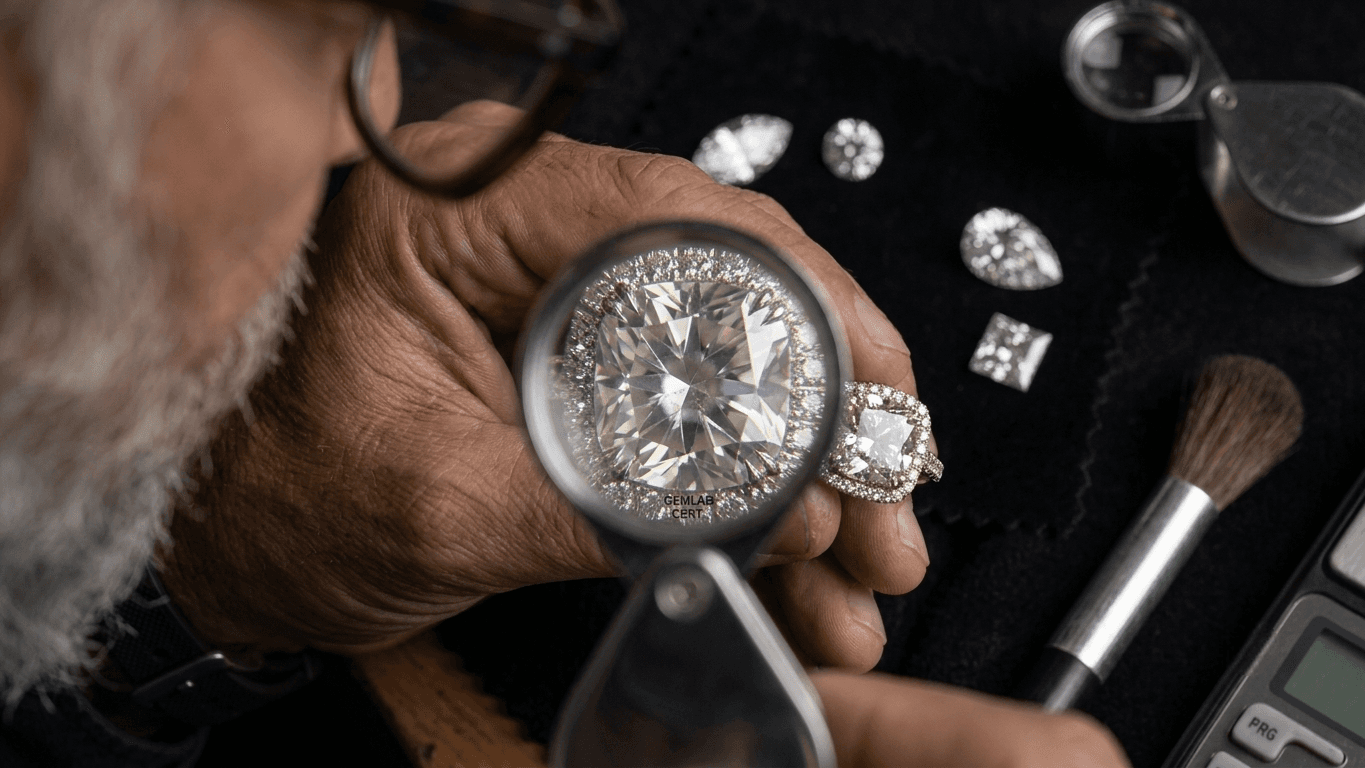
Lab-grown diamonds in Hatton Garden
Lab-grown diamonds are chemically, optically, and physically identical to natural diamonds. The only difference is where they come from — and what they cost. Here's the full picture, including the parts that get left out.
The science in plain English
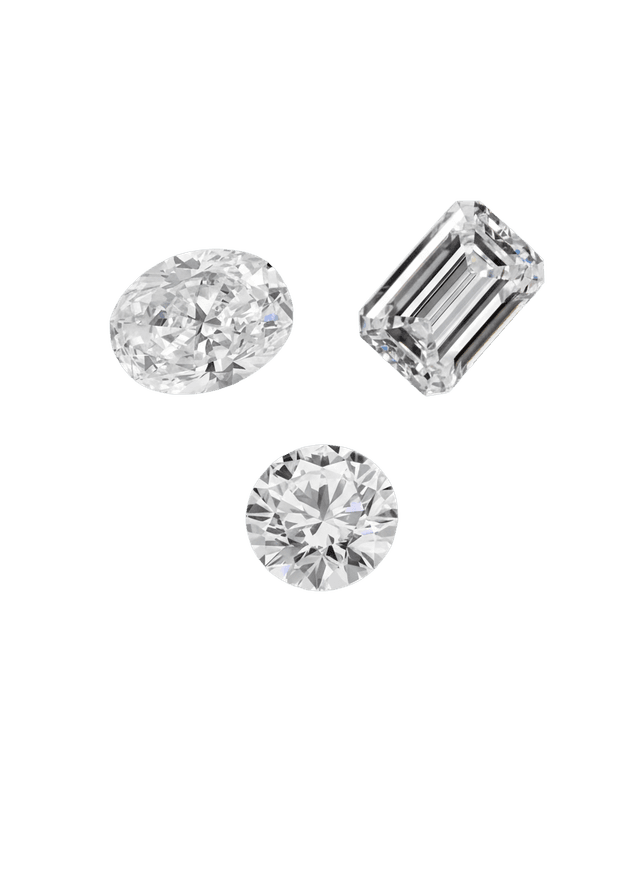
Natural Diamond
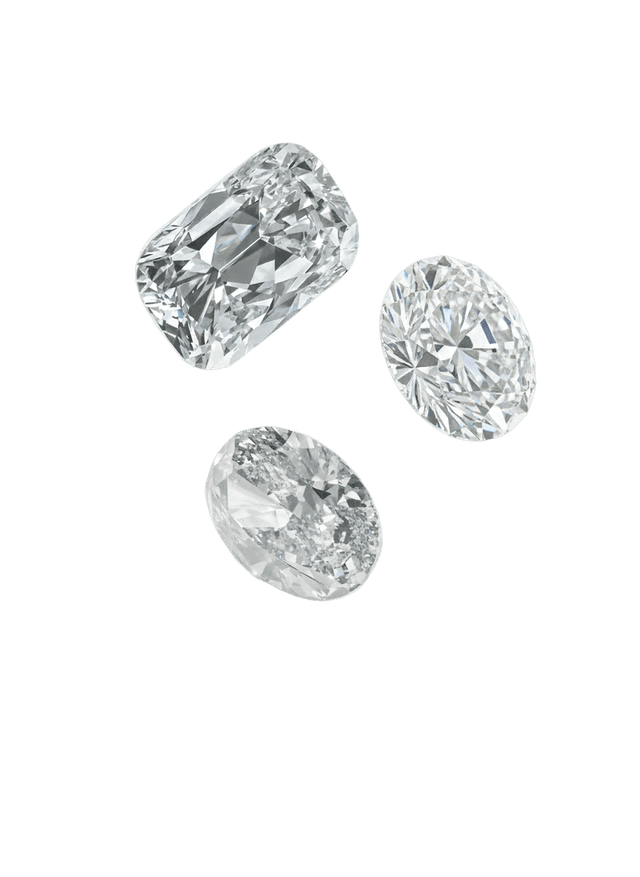
Lab-Grown Diamond
Image courtesy of MOH London
A lab-grown diamond is a real diamond. It has the same crystal structure as a natural diamond — pure carbon atoms arranged in the same tetrahedral pattern. Same hardness (10 on the Mohs scale). Same refractive index (2.42). Same sparkle. Same everything that matters when it's on your partner's hand.
The difference is origin. Natural diamonds form over billions of years, roughly 150 kilometres below the Earth's surface, under extreme heat and pressure. Lab-grown diamonds replicate that process in a controlled environment — either through High Pressure High Temperature (HPHT) or Chemical Vapour Deposition (CVD). The result takes 2 to 4 weeks instead of a billion years.
They're certified by the same labs — GIA and IGI grade lab-grown diamonds using the same 4Cs system (cut, colour, clarity, carat) they use for natural stones. The certificate clearly states the diamond's origin. There's no ambiguity about what you're getting.
HPHT (High Pressure High Temperature)
Mimics the Earth's natural process. A carbon seed is subjected to temperatures around 1,500°C and pressures of 5-6 GPa. The original method, still widely used.
CVD (Chemical Vapour Deposition)
A diamond seed is placed in a chamber filled with carbon-rich gas. The gas breaks down, and carbon atoms deposit layer by layer onto the seed. Increasingly preferred for larger, higher-clarity stones.
Both methods produce genuine diamonds. The method used is noted on the certificate but has no impact on what the finished stone looks like.
Side by side
Most of the properties are identical. The differences are in price, resale, and supply — not in what you see or wear.
| Property | Natural | Lab-Grown | Verdict |
|---|---|---|---|
| Chemical composition | Pure carbon crystal (C) | Pure carbon crystal (C) | Identical |
| Hardness (Mohs scale) | 10 | 10 | Identical |
| Refractive index | 2.42 | 2.42 | Identical |
| Certification | GIA / IGI graded | GIA / IGI graded | Identical |
| Visible difference | None to naked eye | None to naked eye | Identical |
| Price (1ct round, G VS1) | £4,000–£6,000 | £1,500–£3,000 | Different |
| Resale value | Retains 30–50% typically | Minimal resale market | Different |
| Supply | Finite (mined) | Unlimited (manufactured) | Different |
For the full deep-dive on every difference, read our lab-grown vs natural comparison.
Real prices, real numbers
These are real price ranges based on current Hatton Garden pricing for a 1ct round brilliant, G colour, VS1 clarity, excellent cut — the most commonly requested spec for engagement rings.
£4,000–£6,000
1ct round, G colour, VS1 clarity, excellent cut, GIA certified
£1,500–£3,000
1ct round, G colour, VS1 clarity, excellent cut, IGI certified
At 2 carats, the difference becomes more pronounced. A 2ct natural round (G, VS1) runs £12,000–£18,000 in Hatton Garden. Lab-grown: £3,000–£6,000. Same stone on the finger. Different number on the receipt.
The honest take
We think lab-grown diamonds are worth considering seriously. We also think you deserve the full picture before you decide.
Transparency on what you're paying for
The price of a lab-grown diamond more closely reflects the cost of creating and certifying it. Natural diamond pricing is heavily influenced by supply chain markups, mining costs, and decades of marketing around scarcity. With lab-grown, you know more of the price is the stone itself.
More stone for the same investment
At the same price point, you can go larger (a 1.5ct lab-grown instead of a 1ct natural) or higher quality (D colour instead of G). This is not about spending less — it's about what you get for what you spend.
Full certification and grading
Lab-grown diamonds are graded by GIA and IGI using the same system as natural stones. You get a proper certificate with the same level of detail. No guesswork.
Resale value is minimal
This is the biggest trade-off. Because lab-grown supply is effectively unlimited — new stones can always be produced — the secondary market hasn't developed. If you expect to sell or trade up in future, natural diamonds hold their value significantly better. If the ring stays on the finger for life, this matters less.
Prices are still falling
Lab-grown diamond prices have dropped significantly over the past five years as production scales up. A stone you buy today may cost noticeably less in two years. This doesn't change what you wear — but it's worth knowing.
Some people feel strongly about “real”
For some, a diamond's value is partly in its rarity and natural origin — billions of years underground, brought to the surface by geology. That meaning is real, even if the physical properties are identical. You know your partner. If origin matters to them, that matters.
Practical advice
This is the part people worry about most. It usually goes better than expected — but the framing matters.
Don't open with the price difference. Open with the science: “It's the same crystal, the same hardness, the same sparkle. The only difference is it was created in a lab instead of mined from the ground.” The conversation shouldn't feel like you're justifying a compromise. You're explaining a choice.
Don't pretend there are no differences. Say it straight: “Resale value is lower. If we ever wanted to trade up or sell, a natural diamond holds its value better.” Then let them weigh that against what matters to them. Most couples conclude: “We're not planning to sell it.”
If you can, show them a lab-grown diamond in person alongside a natural one. Most Hatton Garden jewellers will happily put both in front of you. When your partner sees that they genuinely cannot tell the difference, the conversation usually resolves itself.
The best approach is to present it as a decision you're making together: “I've done some research. Here's what I found. What do you think?” Most partners appreciate being included in the decision rather than being surprised by either choice. This is a ring they'll wear every day — they should have a say in what it's made of.
Where to go
Not every Hatton Garden jeweller stocks lab-grown diamonds. Some are exclusively natural. Here's who carries them and what their approach looks like.
Their entire business is built around lab-grown diamonds. The largest online selection of certified lab-grown stones in Hatton Garden, with a ring builder that lets you configure your exact ring and see the price before any conversation. Online-first with consultation appointments at 71 Hatton Garden.
Carries both natural and lab-grown certified diamonds through their online platform. Large database with detailed specs and imagery. Consultation suite by appointment.
Primarily natural diamonds with some lab-grown options available. Walk-in showroom experience. Ask specifically about lab-grown availability as their display stock focuses on natural.
Most Hatton Garden jewellers added lab-grown as an option. The best ones built their businesses around it. Look for jewellers with a strong online diamond search that gives you access to thousands of certified lab-grown stones — filter by exact specs, compare certificates, see 360° imagery. A good ring builder lets you configure your exact ring, see the price upfront, and book a consultation to see it in person. No guessing, no “contact for pricing.”
Online-first jewellers invest in technology and sourcing rather than showroom displays — which means full transparency on what you're getting and what it costs, before you speak to anyone. If you want the widest selection and the most transparent process for lab-grown in Hatton Garden, start with our lab-grown vs natural guide.
See what's realistic
Enter your specs — or enter what you want to spend — and see exactly what's available in Hatton Garden right now. Lab-grown and natural, side by side.
Not by looking at it. Lab-grown and natural diamonds have identical optical properties. The only way to distinguish them is with specialised equipment that detects trace differences in how the crystal grew. Every reputable lab-grown diamond comes with certification from GIA or IGI that clearly states its origin — so you always know what you have, and so does anyone who inspects the certificate.
Yes. Diamond testers measure thermal conductivity, and lab-grown diamonds have the same thermal properties as natural diamonds. They are real diamonds — same crystal structure, same hardness, same optical behaviour. They pass every standard gemological test because they are, chemically and physically, the same material.
Honestly, the resale market for lab-grown diamonds is still very limited. Natural diamonds retain roughly 30–50% of their purchase price at resale. Lab-grown diamonds currently have minimal resale value because supply is essentially unlimited — new stones can always be produced. If long-term resale matters to you, natural is the stronger choice. If you see the diamond as part of the ring — something you wear, not something you sell — this may not be a deciding factor.
It depends on what you mean by ethical. Lab-grown diamonds don’t involve mining, which avoids the environmental disruption and supply chain concerns associated with some mining operations. However, growing diamonds in a lab is energy-intensive — the carbon footprint depends on the energy source used by the specific facility. Meanwhile, the natural diamond industry provides livelihoods in mining-dependent economies like Botswana and Namibia. Neither option is straightforwardly "more ethical" — it depends on which factors matter most to you.
Lab-grown diamonds are available in all standard sizes and shapes. In Hatton Garden, you can find lab-grown rounds from 0.3ct to 5ct+, as well as oval, pear, emerald, cushion, princess, and marquise cuts. The technology has matured significantly — larger stones (2ct+) are where the price difference compared to natural becomes most dramatic. A 2ct natural round might cost £12,000–£18,000 in Hatton Garden. The same specs in lab-grown: £3,000–£6,000.
Yes. Always. Full transparency is the foundation of trust, and it’s also a legal requirement — lab-grown diamonds must be disclosed as such. But beyond the legality: most partners appreciate the honesty. Many actively prefer lab-grown once they understand the facts. The conversation usually goes better than people expect. We cover how to approach it in the section above.
Lab-grown is one part of the picture. Here's the rest.
The deep-dive version: every difference, every trade-off, every question you might still have
Forget the gemology lecture. Here's what affects how it looks on her hand — and what's just on paper
GIA vs IGI, what each line means, and how to read a certificate in 30 seconds
The complete guide to buying a diamond — what to look for, what to ask, and what actually matters
Styles, metals, settings, and how to walk into Hatton Garden knowing exactly what you want
How to get there, what to expect, how many shops to visit, and how to handle pressure