The 4Cs — What You'll Actually See
What affects how it looks on her hand vs what's just a number on a certificate. The practical version.
Read guide 6 min
Buyer's guide
You're about to make a decision you've never made before. This guide gives you the framework — what to decide first, what can wait, and what the shops won't tell you.
Decision framework
Most first-time buyers try to figure out everything at once. That's how you end up overwhelmed in a showroom making a decision you're not confident about. Here's the order that works.
Before you look at a single ring, decide the figure you will not exceed. Not a range — a hard ceiling. This protects you from the "just £400 more" upgrade conversation that every jeweller will have with you.
Ignore the "three months' salary" rule. It was invented by De Beers in the 1930s to sell more diamonds. Spend what makes sense for your life right now (here is how to set your number). A well-chosen 0.7ct ring at £3,000 looks better than a poorly chosen 1ct ring at £6,000.
Shape is the single biggest factor in how the ring looks on her hand. Round, oval, emerald, pear, cushion — each creates a completely different look. This is not about the 4Cs. This is about aesthetic preference.
If you don't know her preference, check her Pinterest or Instagram saves, ask her closest friend, or notice whether she wears angular jewellery (emerald, princess) or soft shapes (oval, round). Our diamond shapes guide breaks down each option visually.
White gold, yellow gold, rose gold, or platinum. Look at the jewellery she already wears — that tells you the answer. If everything she owns is silver-toned, go white gold or platinum. If she wears warm tones, yellow or rose gold.
White gold needs replating every 12-18 months (£30-50). Platinum doesn't. Yellow gold shows scratches more visibly. Rose gold is the most durable of the gold options. Our metal types guide covers the practical differences you'll notice after a year of daily wear.
Exact carat weight, specific cut grade, colour and clarity grading, setting details — all of these can be refined once you know your shape, metal, and maximum figure. These are optimisation decisions, not foundational ones. A jeweller can help you dial these in. But if you walk in without knowing your shape, metal, and ceiling, you're handing the steering wheel to someone whose job it is to sell you something.
By shape
Real Hatton Garden prices, how big each carat looks, and what to check before you buy. Prefer colour? See our gemstone engagement ring guide.
Ring styles
These five styles account for over 95% of engagement rings sold in Hatton Garden. We've included real price ranges for both natural and lab-grown diamonds so you can see exactly where each option sits.
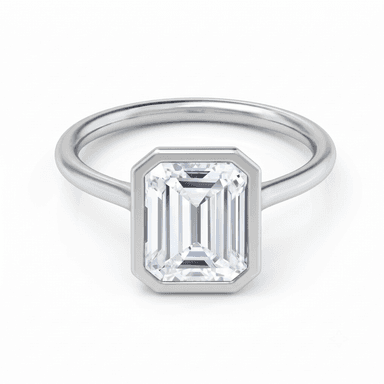
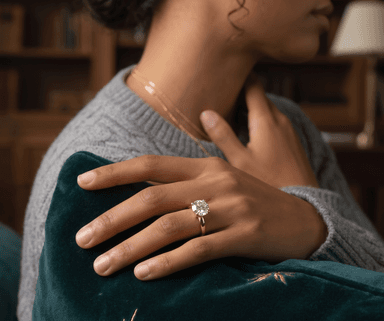
One stone, no distractions. The solitaire is the most popular engagement ring style in the UK for good reason — it puts everything into the diamond. The setting disappears and the stone does all the talking.
Best for: Someone who wears minimal jewellery and values clean lines.
Natural diamond
£1,800 – £8,000 (0.5ct – 1ct, natural diamond, white gold)
Lab-grown diamond
£900 – £3,500 (same specs, lab-grown)
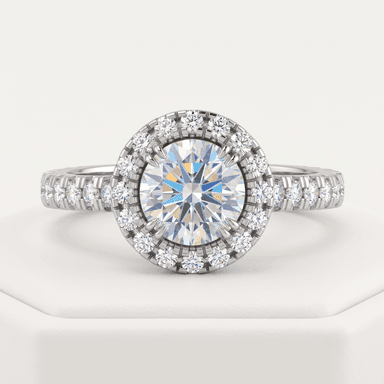
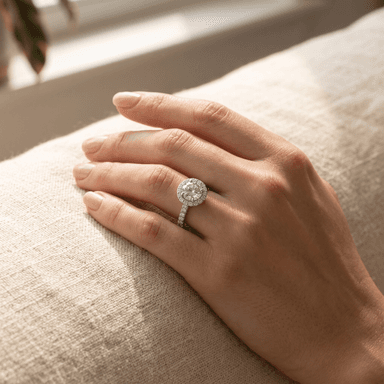
A ring of smaller diamonds surrounding the centre stone. The halo makes the centre diamond appear 15-20% larger than it is. If you want maximum visual impact from a given carat weight, this is the style that delivers it.
Best for: Someone who loves a ring that catches light from every angle. Works particularly well with round and oval centre stones.
Natural diamond
£2,200 – £9,500 (0.5ct – 1ct centre, natural, white gold)
Lab-grown diamond
£1,100 – £4,200 (same specs, lab-grown)
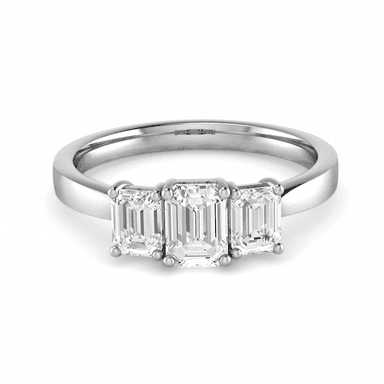
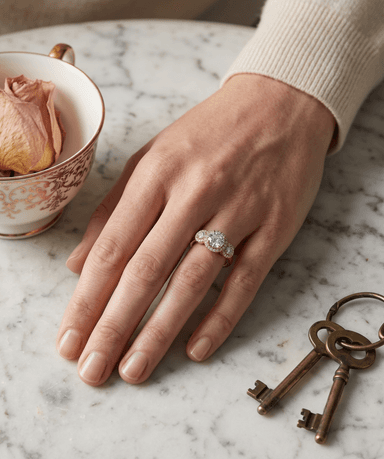
A centre diamond flanked by two smaller stones. Some people choose three stones to represent past, present, and future. Others just like the symmetry and the added weight. Either way, the ring looks substantial without needing a very large centre stone.
Best for: Someone who wants a ring with presence and meaning. Works well with emerald-cut and oval centre stones.
Natural diamond
£2,500 – £10,000 (0.5ct – 1ct centre, natural, white gold)
Lab-grown diamond
£1,200 – £4,500 (same specs, lab-grown)
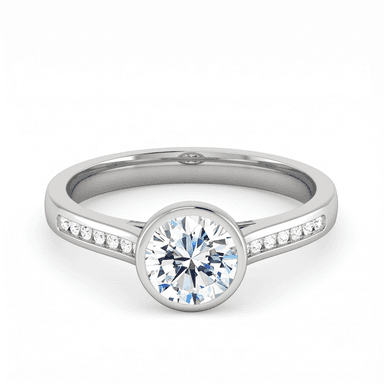
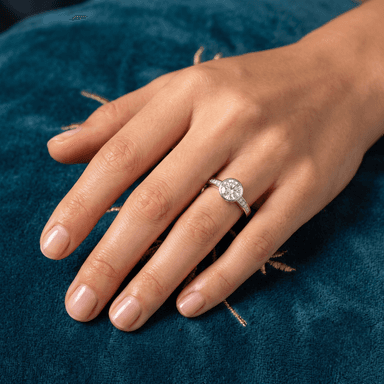
Tiny diamonds set into the band itself, so the metal barely shows. Pavé bands create a continuous sparkle effect along the ring. Often combined with a solitaire or halo setting for the centre stone.
Best for: Someone who wants sparkle everywhere. The band itself becomes part of the display, not just a holder for the main stone.
Natural diamond
£2,000 – £9,000 (0.5ct – 1ct centre, natural, white gold)
Lab-grown diamond
£1,000 – £4,000 (same specs, lab-grown)
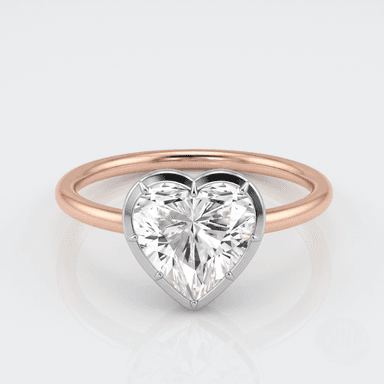
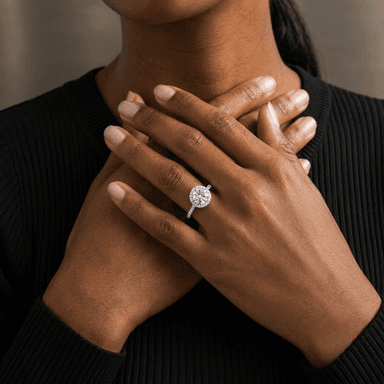
Intricate metalwork, milgrain edges, geometric patterns. Vintage-inspired rings reference design movements from the 1920s-1940s — detailed settings where the craftsmanship of the metalwork is as important as the stone itself.
Best for: Someone with a distinct personal style who gravitates toward antique jewellery, period fashion, or detailed craftsmanship.
Natural diamond
£2,800 – £12,000 (0.5ct – 1ct centre, natural, white gold or platinum)
Lab-grown diamond
£1,400 – £5,500 (same specs, lab-grown)
Image courtesy of MOH London
All prices based on white gold settings. Platinum adds £200-400. Yellow and rose gold are similar to white gold pricing. See our full diamond pricing guide for detailed breakdowns by carat, cut, and clarity.
How to buy
The way you buy matters as much as what you buy. Hatton Garden now offers two distinct approaches, and understanding them means you'll choose the right one for how you make decisions.
Traditional showroom | Online-first + consultation | |
|---|---|---|
| Selection | 20-50 rings on display in cabinets | 1,000,000+ certified diamonds searchable by exact specs |
| Pricing | Often discussed in person, may vary by customer | Published upfront on the website before any conversation |
| Research tools | In-person guidance from sales staff | Ring builders, 360° diamond viewers, spec comparisons |
| The visit | Walk in, browse, and explore — the visit is the research | Book a consultation after designing your ring — the visit is confirmation |
| Best for | People who want to see and touch before deciding | People who want to research every option and know the price before committing |
Start with an online-first jeweller's ring builder tool. Configure your ring, see the price, understand what's possible at your number. Then visit 2-3 shops — both showroom and online-first — to see rings in person. You'll walk in as an informed buyer, not someone figuring it out on the spot. Online-first jewellers invest in technology — ring builders, 360° diamond viewers, certified stone databases — so you can do 80% of the work before you step through the door. See our reviewed jewellers to find the right fit for you.
Preparation
Walking into a jeweller unprepared is how people end up spending more than they planned on a ring they're not sure about. Fifteen minutes of preparation changes the entire experience.
First-timer's advice
This is the most important thing we can tell you: do not buy on your first visit. No matter how good the ring looks, no matter what the sales conversation feels like, walk out and sleep on it.
Real prices
These are real price ranges based on current Hatton Garden pricing. All figures assume a GIA or IGI certified diamond, G-H colour, VS1-VS2 clarity, and a white gold setting.
| Ring specification | Natural diamond | Lab-grown diamond |
|---|---|---|
| 0.5ct round solitaire | £1,800 – £3,000 | £900 – £1,500 |
| 0.7ct round solitaire | £2,500 – £4,500 | £1,200 – £2,200 |
| 1ct round solitaire | £4,000 – £8,000 | £1,800 – £3,500 |
| 1ct oval solitaire | £3,200 – £6,500 | £1,500 – £3,000 |
| 1ct round halo | £4,500 – £9,500 | £2,000 – £4,200 |
| 1.5ct round solitaire | £7,000 – £15,000 | £3,000 – £6,000 |
Prices vary by exact diamond quality, setting complexity, and jeweller. Use these as realistic benchmarks when comparing quotes. Oval, cushion, and pear shapes typically cost 20-30% less than equivalent round diamonds because the cutting process wastes less rough stone.
Lab-grown diamonds are chemically, physically, and optically identical to natural diamonds. The difference is how they're created and their resale trajectory. Natural diamonds hold their value better long-term. Lab-grown diamonds give you significantly better specs for the same figure — a 1ct lab-grown solitaire costs roughly what a 0.5ct natural does. The trade-off is real, and you should understand it before deciding. Read our lab-grown guide to understand the full picture before exploring specific options.
Ready to start?
Choose your shape, metal, and setting style. See what it looks like. Get a realistic price range. Then walk into Hatton Garden knowing exactly what you want — and what it should cost.
There is no rule. The "three months' salary" idea was invented by a diamond marketing campaign in the 1930s. Spend what feels right for your situation. In Hatton Garden, a well-made engagement ring with a certified natural diamond starts around £1,500 for a 0.3ct solitaire. A 1ct round solitaire in white gold typically costs £4,000-£8,000 depending on diamond quality. Lab-grown options start at roughly 40-60% less for the same specs. The right ring is one you can walk out with confidently, not one that creates financial stress.
Round brilliant accounts for about 50% of all engagement ring diamonds sold in Hatton Garden. Oval is the fastest-growing shape, now around 20%. Emerald cut, pear, and cushion make up most of the remainder. Round commands a premium because the cutting process wastes more rough diamond — expect to pay 20-30% more than an equivalent oval or cushion.
Both are real diamonds — identical crystal structure, identical appearance. The differences are origin and resale. Natural diamonds are mined and hold their value better over time. Lab-grown diamonds are created in a controlled environment and cost 40-60% less for the same specs, but resale value is lower. Neither choice is wrong. If long-term value matters to you, go natural. If you want the best possible specs for what you're spending, lab-grown delivers that. Read our full guide at /guides/lab-grown-vs-natural for the complete picture.
Ready-made rings from stock: same day or within a week. Custom or bespoke rings: 3-6 weeks depending on the jeweller and complexity. Online-first jewellers like MOH London typically deliver within 2-3 weeks for standard configurations. If you need a ring for a specific date, work backwards and add a buffer. Rushing a bespoke ring to meet a deadline is how mistakes happen.
With traditional showroom jewellers, there is sometimes room to negotiate — particularly if you are paying in full, buying multiple pieces, or comparing a like-for-like quote from another shop. Online-first jewellers typically have fixed, transparent pricing because margins are already optimised. Rather than haggling, your best move is to compare identical specs (same carat, cut, colour, clarity, certification) across 3-4 jewellers. The price differences will tell you everything.
GIA (Gemological Institute of America) or IGI (International Gemological Institute). These are independent third-party labs that grade your diamond objectively. Every reputable Hatton Garden jeweller should provide one. Avoid in-house certificates or lesser-known labs — they often grade more generously, which means the diamond may not be what it claims. A GIA-certified H colour is an H colour. An in-house certified H might be a J.
You don't need to know everything today. But the more you understand before you visit, the more confident your decision will be.
What affects how it looks on her hand vs what's just a number on a certificate. The practical version.
The complete decision guide — from first thought to final purchase. Every step, no assumptions.
How to read a certificate, what the grades mean in practice, and the questions to ask any jeweller.
Same stone, different story. The full picture — including the trade-offs most guides skip.
What actually looks different after a year of daily wear. Durability, colour, and maintenance compared.
How to get there, what to expect, how many shops to visit, and how to handle the sales conversation.