Pear Engagement Rings
A pear looks larger than a round of the same weight and costs less per carat.
Read guide
Engagement rings / Marquise
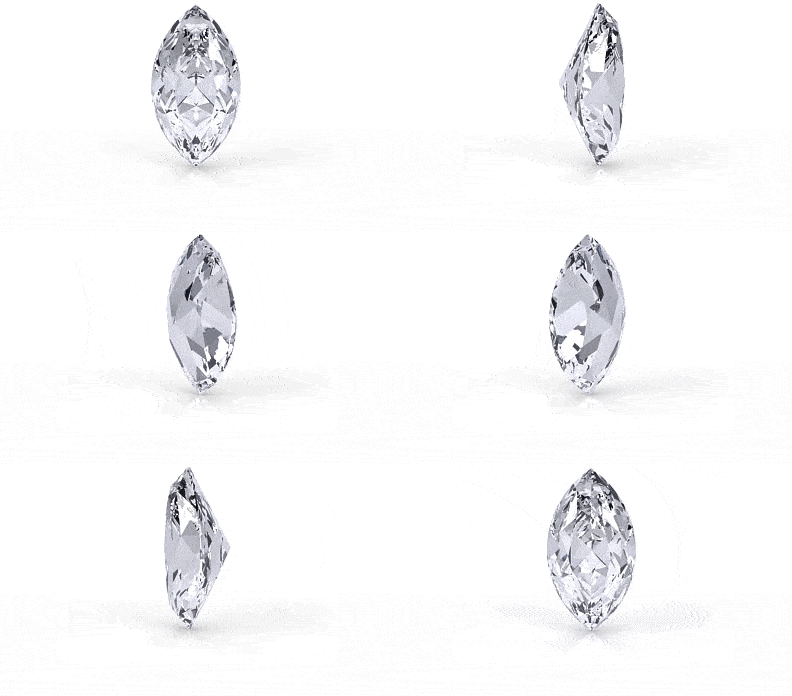
A marquise is long with a point at each end. Of all the diamond shapes, it looks the biggest for its weight. It was everywhere in the 1970s and 80s, and it’s coming back, often set sideways or with a vintage twist.
In short: A marquise gives you the most length on the finger for the weight, and costs less per carat than round. It has two points to protect and usually a bow-tie, so see the stone and choose a setting with V-claws on both ends. A 1ct marquise solitaire in 18ct white gold costs about £3,700–£5,350 natural, or £1,550–£2,750 lab-grown.
Size
Carat is weight, not size. Here's a 1ct marquise drawn to scale against a 1ct round, and what each weight measures from above.
| Carat | Typical size |
|---|---|
| 0.5ct | 7.9 × 4.0mm |
| 0.7ct | 8.9 × 4.4mm |
| 1.0ct | 10.0 × 5.0mm |
| 1.5ct | 11.4 × 5.7mm |
| 2.0ct | 12.6 × 6.3mm |
Length-to-width ratio: 1.85–2.10. Around 2.0 is classic. Below 1.75 looks stubby; above 2.15 looks very thin.
Prices
A solitaire in 18ct white gold with a certified F colour, VS2 clarity, well-cut marquise diamond. Prices include the setting.
| Carat | Natural diamond | Lab-grown diamond |
|---|---|---|
| 0.5ct | £1,550–£2,300 | £800–£1,350 |
| 0.7ct | £2,300–£3,450 | £1,050–£1,900 |
| 1.0ct | £3,700–£5,350 | £1,550–£2,750 |
| 1.5ct | £7,000–£10,050 | £2,700–£4,850 |
| 2.0ct | £11,750–£17,600 | £4,350–£8,250 |
Why F and VS2? The points can show a hint of colour, so in white metal we suggest F. In yellow gold, which suits the vintage look, G or H is fine.
Platinum adds roughly £200–£300 to the setting. Lab-grown diamonds look identical but resell for much less. Our lab-grown vs natural guide covers the trade-off.
On the hand
A 1ct marquise is about 10 × 5mm, longer than any other shape at that weight. It can look almost twice the length of a 1ct round.
Set lengthways, it makes the finger look long and slim. Set sideways (east-west), it looks modern and sits lower.
It sparkles like an oval and usually has a bow-tie across the middle.
Before you buy
Every diamond should come with a GIA or IGI report. Here's how to read one in 30 seconds.
Settings
Six claws including two V-claws on the points. The classic.
Set sideways across the finger. A fresh, modern take on a vintage shape.
Small round diamonds around the marquise, a look borrowed from Georgian and Victorian rings.
Where to look
Shape is the one thing you can't judge from a certificate, so you need to see real stones. A traditional shop window might hold a handful of marquises. Online-first jewellers give you thousands of certified marquise diamonds to filter by size, ratio and price before you book a viewing, so your visit is for choosing, not searching.
MOH London's certified diamond search is a good place to start: filter for marquise, compare certified stones side by side, then see your shortlist at their Hatton Garden consultation suite. Or compare every option in our independent jeweller reviews.
Or see every shape side by side in our diamond shapes guide.
A pear looks larger than a round of the same weight and costs less per carat.
An oval looks larger than a round of the same carat weight and costs less per carat.
Emerald cuts cost less per carat than round and look clean and architectural rather than sparkly.
In Hatton Garden, a 1ct marquise solitaire in 18ct white gold typically costs £3,700–£5,350 with a natural diamond, or £1,550–£2,750 with a lab-grown diamond. That’s for F colour, VS2 clarity and a well-cut, certified stone.
About 10.0 × 5.0mm from above, for a stone of typical proportions. A 1 carat round is about 6.4mm across.
The story goes that Louis XV of France asked for a diamond shaped like the smile of his mistress, the Marquise de Pompadour. It’s a legend rather than recorded fact, but the name stuck.
Yes. A 1ct marquise is about 10mm long, the longest of any shape at that weight. It looks larger on the finger than a round, oval or pear of the same carat.