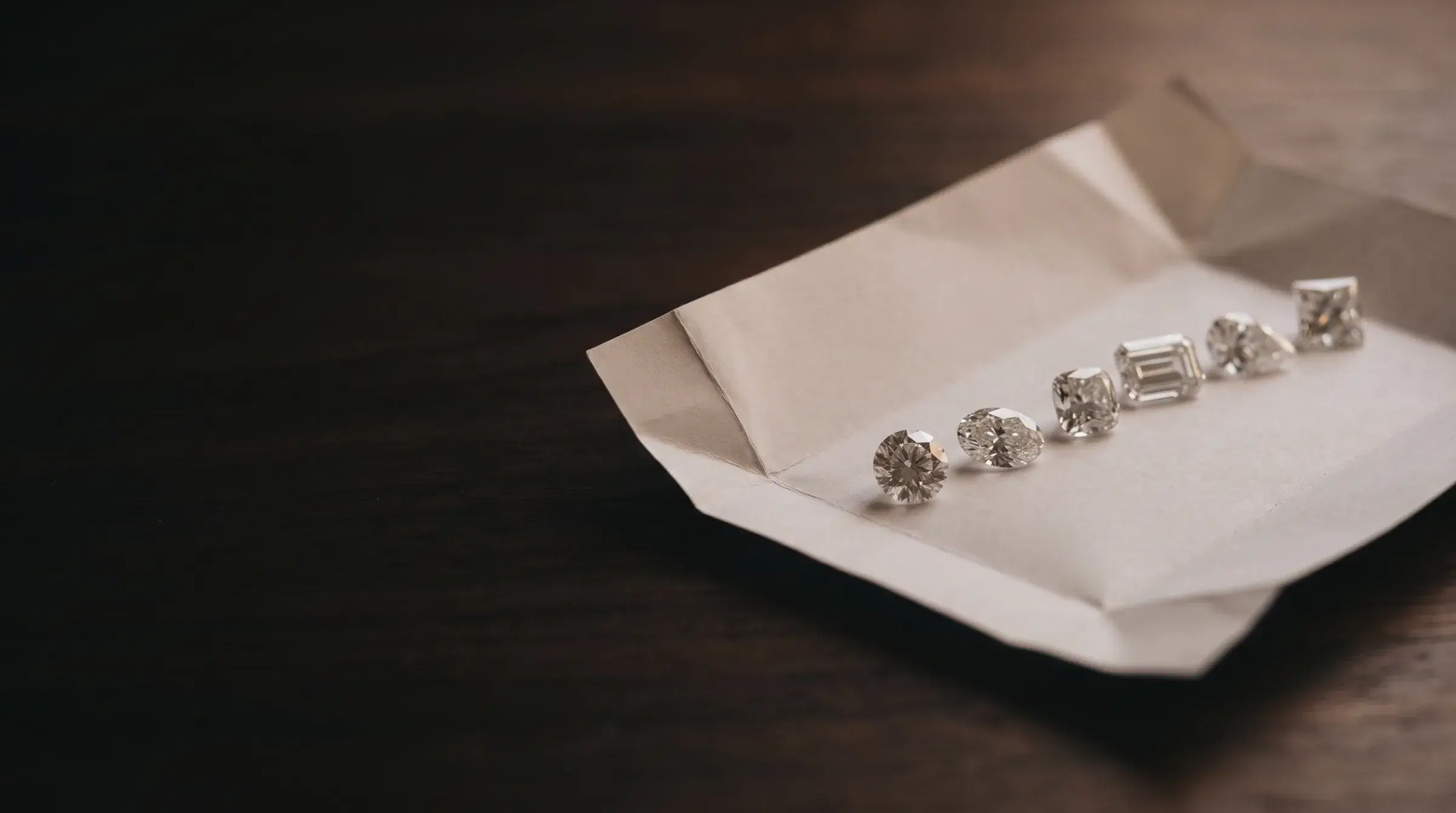
Ten shapes, each with a different personality. Here is how they look on a hand, who they suit, what they cost, and which ones are trending right now.
PK
Parth KananiSeptember 2026 · 6 min read
Diamond shape is the first thing anyone notices about an engagement ring. Not the carat weight, not the clarity grade, not the metal — the shape. It defines the character of the ring more than any other single decision. And unlike the other choices (which can be optimised with data), shape is purely personal.
There is no objectively “best” shape. Round is the most popular because it has the most consistent sparkle, but oval is growing fast because it looks larger per carat. Emerald is a completely different aesthetic — quiet, architectural, and sophisticated. Cushion sits comfortably between vintage and modern. Each shape tells a different story.
We recommend choosing shape before anything else — before you think about carat weight, colour, or clarity. Once you know the shape, everything else falls into place around it.
At a glance
Every shape compared
A quick reference before the deep dive. Prices shown relative to round brilliant (the most expensive shape per carat).
Shape
Sparkle type
Price vs round
Apparent size
Market share
Round
Intense, even sparkle
Baseline
Standard
~55%
Oval
Bright, lively
20-30% less
Appears larger
~20%
Cushion
Broad, soft flashes
25-35% less
Standard
~10%
Emerald
Hall-of-mirrors
30-40% less
Appears larger
~5%
Princess
Strong, angular sparkle
20-30% less
Standard
~6%
Pear
Bright, directional
25-35% less
Appears larger
~4%
Radiant
Strong, even sparkle
30-40% less
Standard
~3%
Asscher
X-pattern flashes
30-40% less
Slightly smaller
~2%
Marquise
Bright, dramatic
30-40% less
Appears largest
~2%
Heart
Bright, round-like
25-35% less
Standard
~1%
The deep dive
Each shape in detail
How each shape looks, who it suits, what it costs, and where the trend is heading.
Round Brilliant
~55% of market
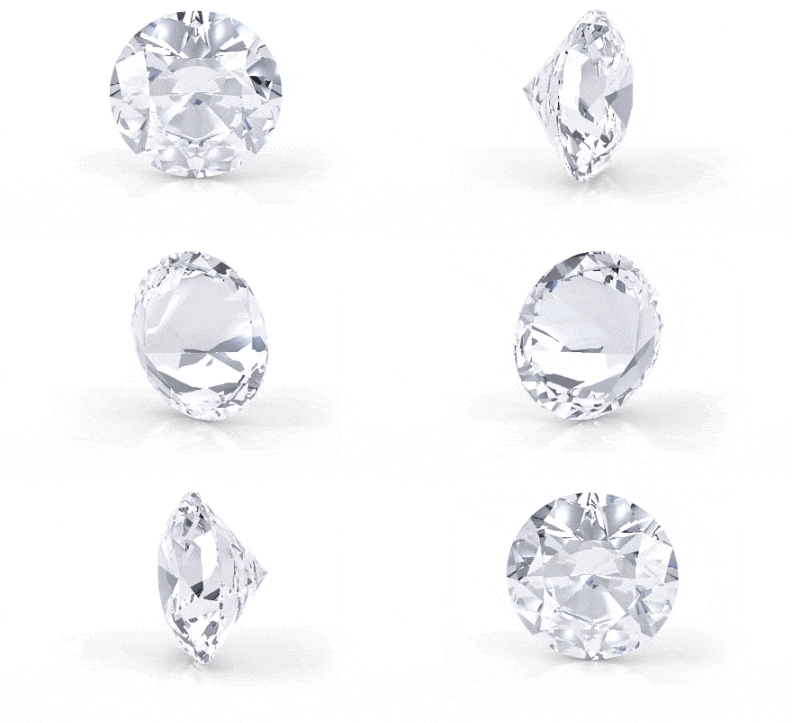
The classic. Round is the most popular diamond shape and the one with the most consistent, intense sparkle. It has 57 or 58 facets engineered to maximise light return — more than any other shape. Round diamonds look symmetrical from every angle, which makes them universally flattering on any hand size or finger shape.
Best for
Anyone who wants maximum sparkle and a timeless, classic look. The safest choice if you are unsure of her preference.
Price per carat
Most expensive per carat. Round cuts waste the most rough diamond material during cutting, which is factored into the price. Expect to pay 20-30% more than fancy shapes at equivalent specs.
Trend
Still the most popular shape overall, but its market share has dropped from 75% to about 55% over the past decade as oval and cushion have grown.
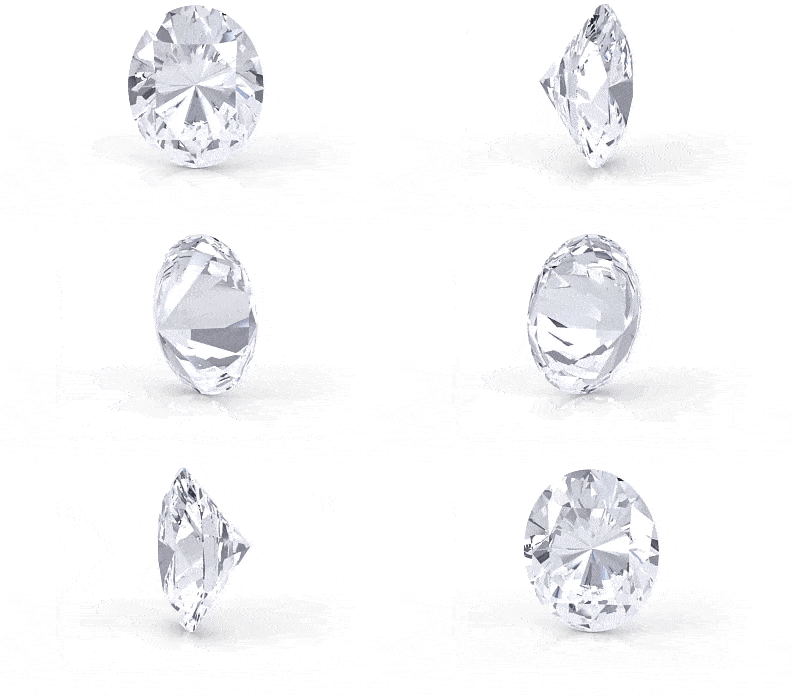
The shape that has defined the last five years. Oval diamonds have a larger face-up area than round at the same carat weight, so they appear bigger on the hand. The elongated shape also creates a slimming, lengthening effect on the finger. Oval has overtaken every shape except round in popularity.
Best for
People who want a modern, fashion-forward look with maximum visual size. Particularly flattering on shorter or wider fingers because of the elongating effect.
Price per carat
20-30% less per carat than round. Oval cuts retain more of the rough diamond, making them more efficient to produce. You get more visual size for the same weight.
Trend
The fastest-growing shape. Was around 5% of the market ten years ago, now sits at approximately 20%. Driven by celebrity engagement rings and social media.
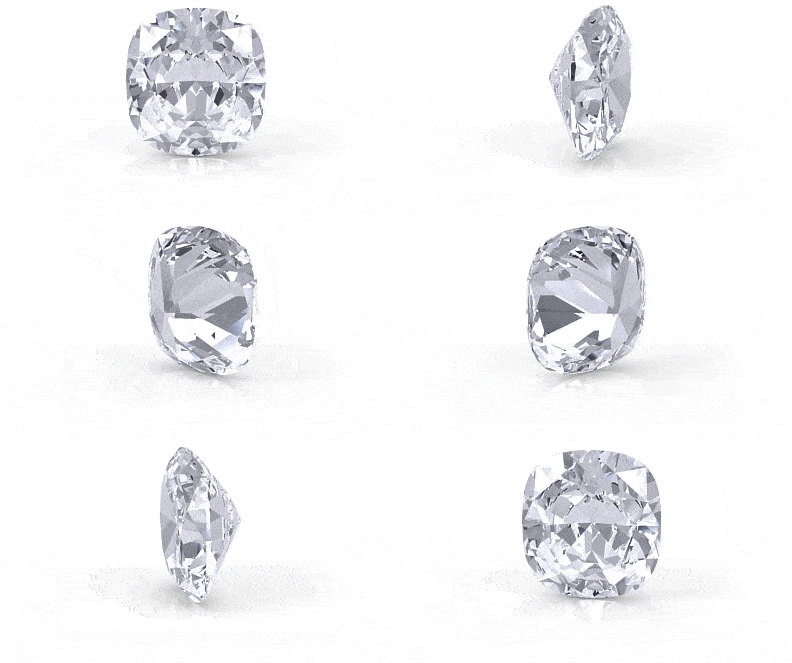
A square or rectangular shape with rounded corners — like a pillow, which is where the name comes from. Cushion cuts have larger facets that produce broad, dramatic flashes of light rather than the small, intense sparkle of a round cut. This gives them a softer, more romantic feel.
Best for
People drawn to a vintage-meets-modern aesthetic. The soft corners make it versatile — it works in both traditional and contemporary settings. Equally flattering with halo and solitaire styles.
Price per carat
25-35% less per carat than round. One of the best value shapes — significant visual presence at a lower cost per carat.
Trend
Steady at around 10% of the market. Has a loyal following. Less trend-driven than oval, more of a considered personal choice.
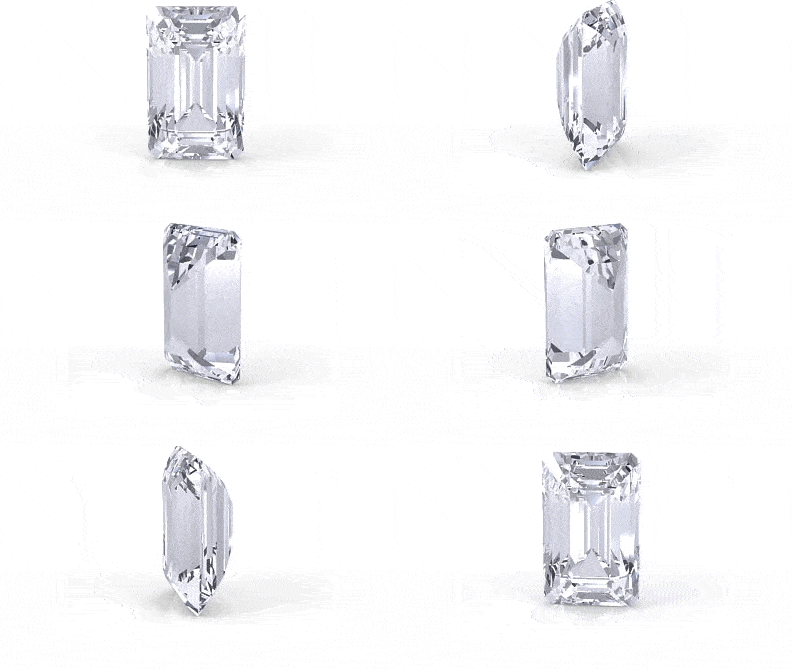
A rectangular shape with step-cut facets that create a hall-of-mirrors effect rather than sparkle. Emerald cuts are about depth and clarity — large, open facets that draw the eye in rather than bouncing light back. This makes them look sophisticated and architectural. They show more of the diamond itself, which means clarity and colour matter more in this shape.
Best for
People who appreciate understated elegance over maximum sparkle. Art deco fans. Anyone who finds round diamonds too common. The clean, geometric lines suit confident, fashion-aware wearers.
Price per carat
30-40% less per carat than round. Because the step-cut style shows inclusions more easily, you may want to go one clarity grade higher (VS1 instead of VS2), which partially offsets the price advantage.
Trend
Around 5% of the market but growing steadily. Seen as the "sophisticated choice" — consistently popular with design-conscious buyers.
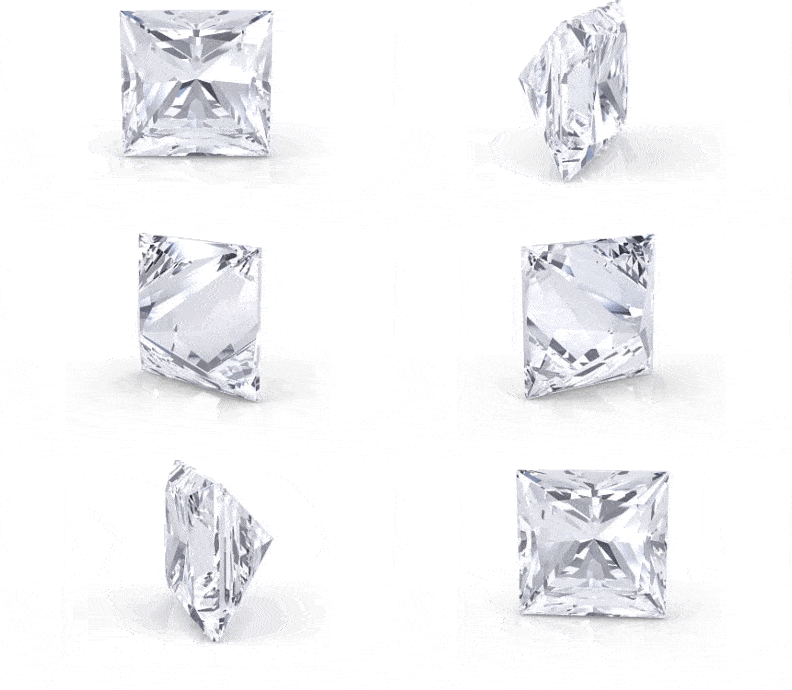
A square shape with pointed corners and brilliant-cut facets underneath. Princess cuts deliver strong sparkle in a modern, geometric silhouette. The sharp corners give it a clean, contemporary look that feels distinctly different from the softness of round and cushion cuts.
Best for
People who want a modern, angular aesthetic with strong sparkle. Suits minimalist ring designs and channel-set bands. The square proportions work well on most hand shapes.
Price per carat
20-30% less per carat than round. The square shape retains about 80% of the rough stone — more efficient than round, which retains only about 40%.
Trend
Was the second most popular shape in the 2000s and 2010s but has been overtaken by oval. Still holds around 5-7% of the market. Slightly less fashionable currently, but fashion is cyclical.
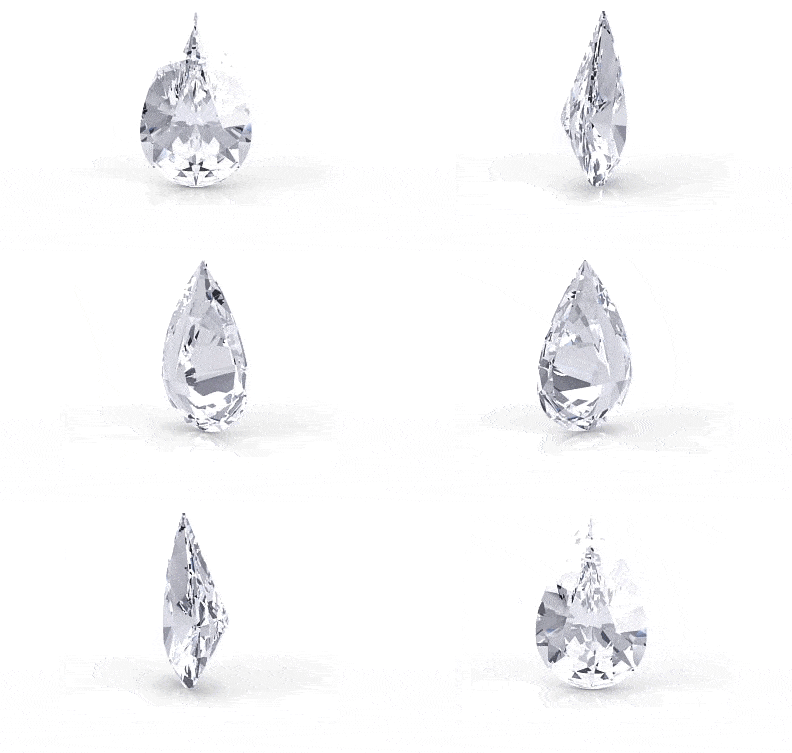
A teardrop shape — round at one end, pointed at the other. Pear-shaped diamonds are distinctive and eye-catching. When worn with the point facing the fingertip, they elongate the finger dramatically. The asymmetric shape creates a sense of movement and individuality that symmetrical shapes do not have.
Best for
People who want something distinctive and individual. The pear shape has a strong visual identity — it is a statement choice, not a safe choice. Works especially well as a solitaire where the shape can speak for itself.
Price per carat
25-35% less per carat than round. The elongated shape gives it a larger face-up appearance per carat, similar to oval.
Trend
Around 3-4% of the market. Pear is a perennial alternative choice — it never dominates but never disappears either. Increasingly seen in celebrity engagement rings.
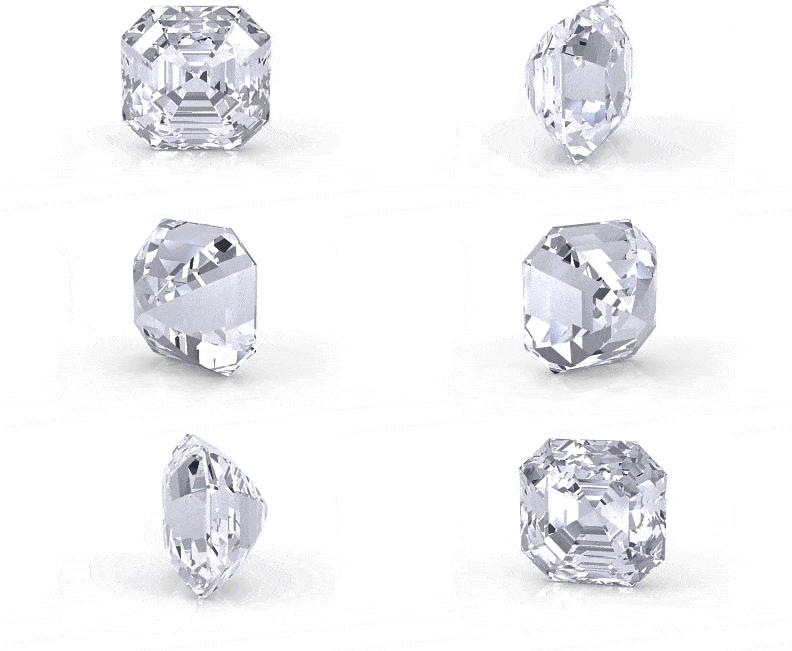
A square version of the emerald cut — step-cut facets with a distinctive X pattern when viewed from above. Asscher cuts have a deeper body than emerald cuts, which creates more light play within the stone. Originally created in 1902 by the Asscher Diamond Company in Amsterdam, it has a genuinely historic pedigree.
Best for
People who love art deco design and want something with real heritage. The Asscher has a devoted following — people who choose it tend to be certain it is their shape. Like emerald, it rewards higher clarity grades because the open facets show the diamond clearly.
Price per carat
30-40% less per carat than round. Niche shape, so selection may be smaller at any given jeweller. Online-first jewellers with large databases will have more options.
Trend
Around 1-2% of the market. A specialist choice, not a mass-market one. That exclusivity is part of its appeal.
Radiant
~3% of market
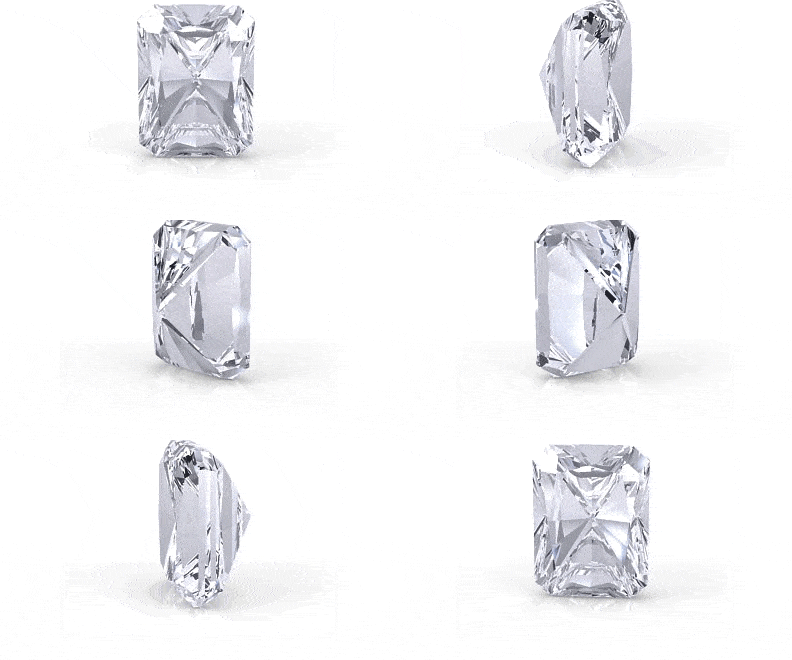
A rectangular or square shape with cropped corners and brilliant-cut facets. Think of it as the sparkle of a round diamond in the silhouette of an emerald cut. Radiant cuts are the best of both worlds — the geometric shape of a step cut with the light performance of a brilliant cut.
Best for
People who like the shape of an emerald cut but want more sparkle. The cropped corners make it practical for everyday wear (no sharp points to catch on things). Works well in both solitaire and halo settings.
Price per carat
30-40% less per carat than round. Good value shape with strong visual presence. The brilliant-cut faceting means clarity is less critical than with emerald or Asscher.
Trend
Around 3% of the market. Growing slowly as buyers discover it as an alternative to cushion and emerald. Still relatively under the radar.
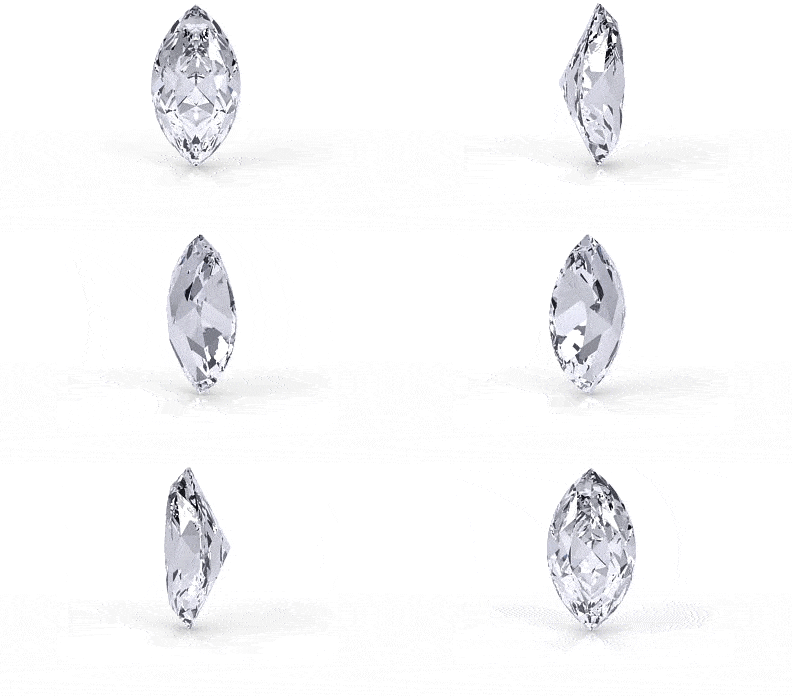
An elongated shape with pointed ends — like a football or an eye. The marquise has the largest face-up area of any diamond shape per carat weight, making it appear significantly larger than it actually weighs. Legend has it the shape was commissioned by King Louis XV to resemble the smile of the Marquise de Pompadour.
Best for
People who want maximum visual size and a vintage, dramatic aesthetic. The extreme elongation creates a strong finger-lengthening effect. Marquise works best as a solitaire — the shape is the design.
Price per carat
30-40% less per carat than round. Combined with the large face-up area, marquise offers one of the best size-to-cost ratios of any shape.
Trend
Around 1-2% of the market. Was popular in the 1980s and is experiencing a quiet comeback among buyers looking for something distinctive.
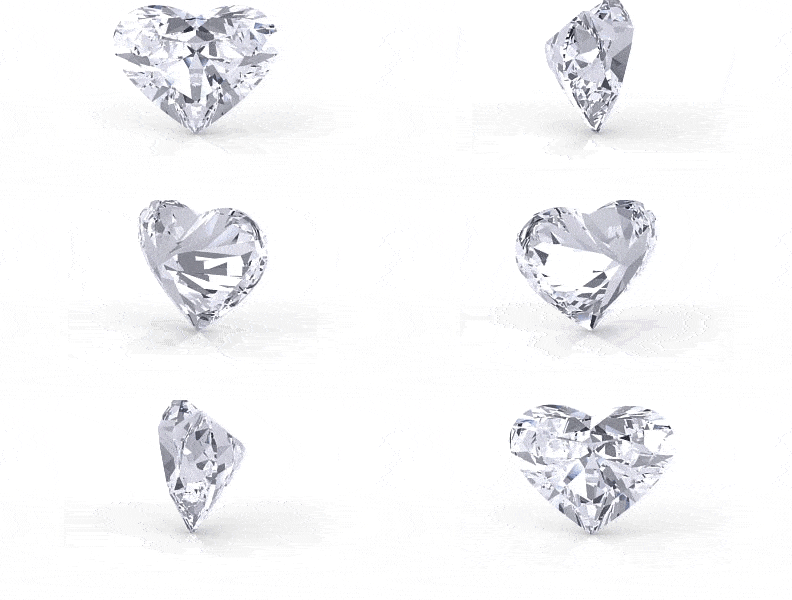
A heart-shaped diamond — the most overtly romantic of all shapes. Heart cuts require highly skilled cutting to achieve good symmetry (both halves must mirror each other), which means quality varies more than with other shapes. The cleft at the top and the point at the bottom need to be well-defined for the shape to read clearly.
Best for
People who want an unmistakably romantic, sentimental choice. The symbolism is obvious and deliberate. Heart shapes work best at larger carat weights (0.75ct and above) where the shape is clearly visible — below that, it can look more like a round diamond.
Price per carat
25-35% less per carat than round. Niche shape with limited demand, so pricing tends to be favourable. Selection is smaller than mainstream shapes.
Trend
Around 1% of the market. A personal, emotional choice rather than a fashion-driven one. Not for everyone, but meaningful for those who choose it.
If you are choosing for someone else, start with what they have already told you — even indirectly. Pinterest boards, Instagram saves, comments about friends' rings, or jewellery they already wear. Most people have a preference even if they have not articulated it clearly.
If you genuinely have no idea, here is a simple framework:
She prefers classic, timeless style
Go with round. It is the shape that has been the standard for over a century. It will never look dated, and it has the most versatile sparkle pattern. If she wears simple, understated jewellery, round is almost always right.
She follows fashion and trends
Consider oval or cushion. Oval is the shape of the moment — it photographs well, looks modern, and has the visual size advantage. Cushion offers a softer, vintage-modern crossover that feels considered.
She has distinctive, architectural taste
Look at emerald or Asscher. These step-cut shapes have a completely different character — less sparkle, more depth and clarity. They suit someone who appreciates design and does not need the ring to shout from across the room.
She wants something nobody else has
Consider pear, marquise, or radiant. These shapes make up less than 10% of the market combined. They are distinctive, personal, and conversation-starting. If she has ever said she does not want the same ring as everyone else, these are your options.
Practical note
How shape affects the other specs
The shape you choose changes which grades matter and which you can relax on. Here are the key interactions:
Step cuts (emerald, Asscher) need higher clarity
Their large, open facets act like windows into the stone. We recommend VS1 instead of VS2 for these shapes. Inclusions that would be invisible in a round diamond may be visible in an emerald cut.
Elongated shapes (oval, pear, marquise) show colour at the tips
Colour can concentrate at the pointed ends. We recommend staying at H or above for these shapes in white metal settings, even though round diamonds look fine at I or J.
Round is the only shape with formal cut grades
GIA only grades cut for round diamonds. For all other shapes, you need to check symmetry and polish (both Excellent or Very Good) and ideally view the diamond in 360-degree video or in person.
Elongated shapes can show a bow-tie effect
Oval, pear, and marquise diamonds can display a dark bow-tie shadow across their centre. This is normal and present in most stones, but varies in intensity. Always view the specific stone — a heavy bow-tie is worth avoiding.
Understand the 4Cs in detail. Our 4Cs guide explains exactly what each grade looks like in practice — which grades to prioritise, which to relax on, and where the money makes the biggest visual difference.
Reading about shapes helps, but seeing them is better. Our diamond size pages show realistic on-hand images for every shape and carat combination. Or jump straight into the ring builder where you can configure your shape, metal, and setting all in one place.
What is the most popular diamond shape for engagement rings?+
Round brilliant is still the most popular, chosen for roughly 55% of engagement rings. Oval is the clear second at around 20% and growing fast. Cushion sits third at about 10%. The remaining shapes — emerald, princess, pear, radiant, asscher, marquise, and heart — share the remaining market between them.
Which diamond shape looks the biggest?+
Marquise has the largest face-up area per carat, followed by pear and oval. These elongated shapes spread their weight across a wider surface, so they appear larger than round or square shapes at the same carat weight. A 0.8ct oval can look as large as a 1ct round when set in a ring.
Which diamond shape is the best value?+
Oval, cushion, and emerald offer the best combination of visual size and price per carat. All three cost 25-40% less per carat than round, and oval and cushion also appear larger per carat due to their elongated or spread-out proportions. Emerald offers the most dramatic price advantage but has a very different light pattern — hall-of-mirrors rather than sparkle.
Does diamond shape affect how much it sparkles?+
Yes, significantly. Round brilliant is engineered for maximum sparkle — the 57-58 facets are mathematically optimised to return light. Princess and radiant also sparkle intensely due to their brilliant-cut facet patterns. Emerald and Asscher cuts are step-cut, which creates broad flashes of light rather than intense sparkle — more like a mirror than a disco ball. The choice is aesthetic, not quality.
Can you change the diamond shape later?+
You can change the diamond in the ring, but you cannot reshape an existing diamond. If you decide you prefer a different shape after purchase, you would need to buy a new diamond and have the setting modified or replaced to hold the new shape. This is why it is worth being confident about shape before committing — it is the one decision that is hardest to undo.
Keep reading
Now you know the shape, here is what to decide next.